What XRF Lead Testing in NYC Actually Measures
Before unpacking the consequences of a failed result, it helps to understand what a positive XRF reading actually means in practice.
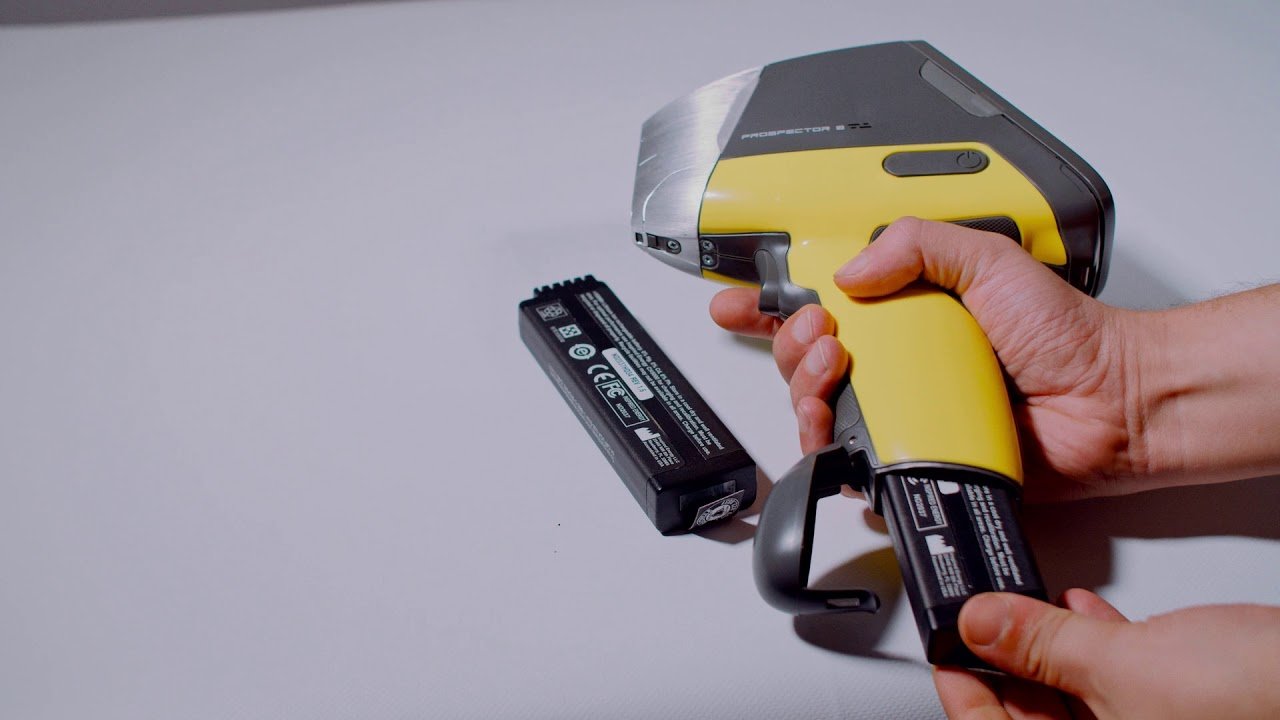
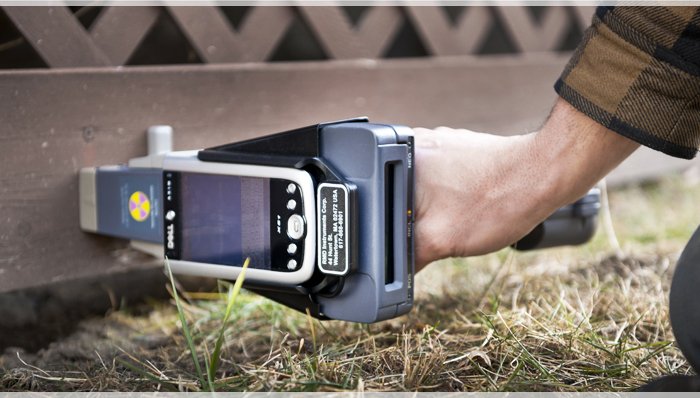
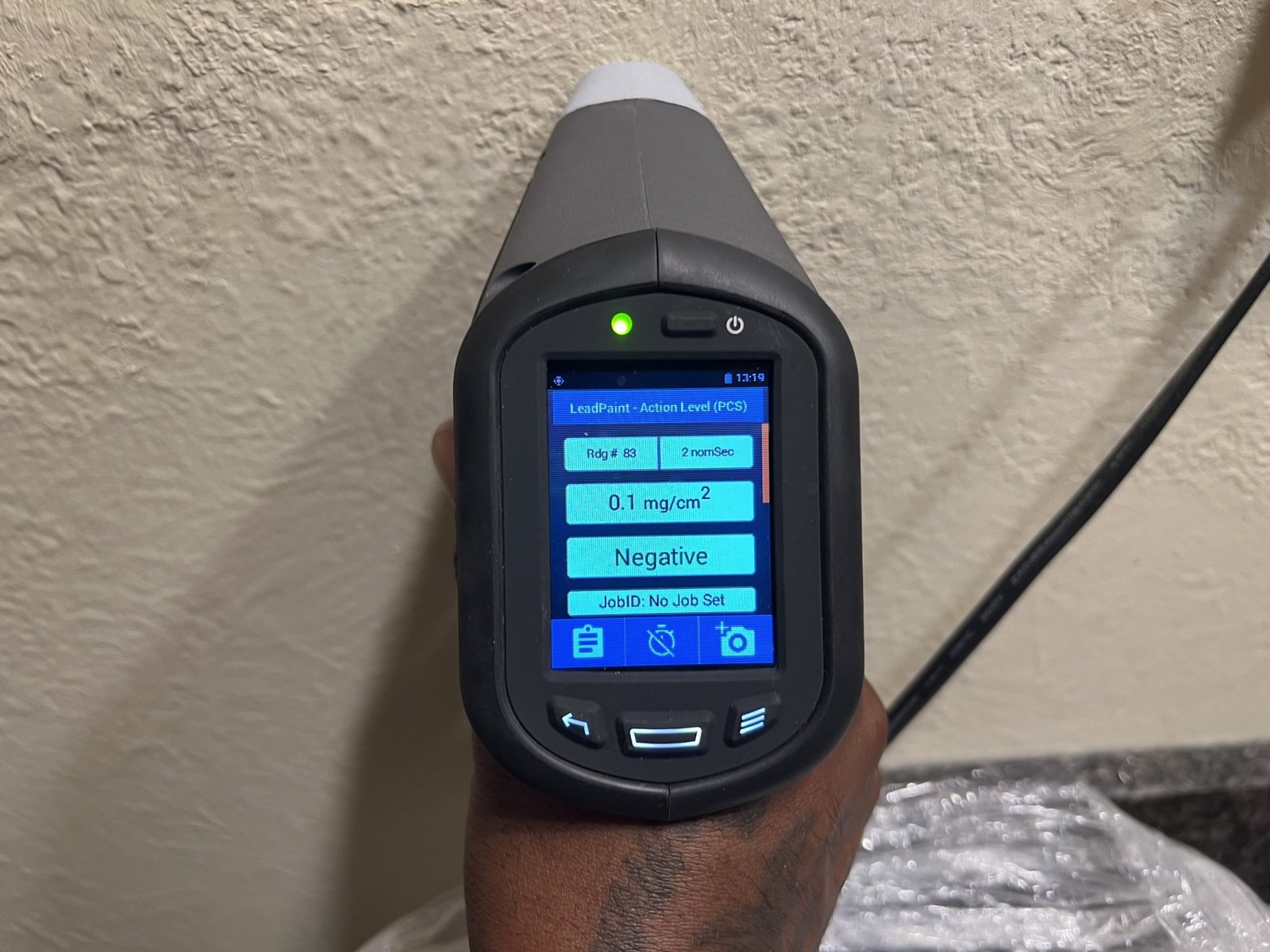
XRF, which stands for X-ray fluorescence, is a non-destructive testing method that uses a low-level X-ray beam to excite atoms within a painted surface. Each element releases a distinct energy signature when struck, and the analyzer reads the lead-specific energy to calculate how much is present. The test takes only seconds per surface and does not damage walls, trim, or any other tested material. It is the reason XRF lead testing has become the gold standard for compliance inspections across New York City’s older housing stock.
Under NYC’s Local Law 31 of 2020, the applicable action level for XRF lead testing in NYC is 0.5 milligrams per square centimeter (mg/cm²). Any surface reading at or above that threshold is classified as containing lead-based paint. This standard applies to all tenant-occupied units and common areas in buildings constructed before 1960, and in buildings built between 1960 and 1978 where lead paint is known or suspected.
This level was specifically chosen because it is more protective than older federal benchmarks, reflecting NYC’s LeadFreeNYC initiative, which aims to eliminate childhood lead exposure across the city by 2030.
A Positive XRF Result Does Not Automatically Mean a Violation
This distinction matters enormously, and it is one many property owners get wrong.
Finding lead above the action level on your lead paint inspection does not immediately put you in violation of the law. It means lead-based paint is present. What triggers a legal violation is one of the following:
Deteriorated Lead-Based Paint
If the paint containing lead is peeling, chipping, cracking, or otherwise damaged, that condition is hazardous and must be corrected. This is where HPD lead violations are most commonly generated.
Failure to Test
Not completing required XRF testing by the applicable deadline is itself a violation under Local Law 31. The August 9, 2025 deadline for pre-1960 buildings has now passed, meaning HPD enforcement is actively issuing violations to non-compliant properties as of 2026.
Failure to Correct After a Hazard is Identified
If your report shows lead-based paint and a subsequent inspection finds it in deteriorated condition, failing to remediate within mandated timeframes generates Class C violations.
No Documentation
Property owners are required to retain lead paint testing records for a minimum of 10 years and make them available upon HPD request. Missing or incomplete records can generate violations entirely separate from the test results themselves.
In other words, a clean, intact lead-painted surface that has been properly identified and documented puts you in a very different legal position than an untested building or one with peeling paint and no paperwork trail.
Immediate Obligations When Lead Paint Is Found
Once an XRF lead inspection in NYC confirms lead-based paint is present, the specific obligations that follow depend on the condition of the paint and the occupancy of the unit.
If the paint is intact and in good condition:
The property owner must document the finding, maintain records, and implement an ongoing maintenance and monitoring program. Annual tenant inquiries about whether a child under six lives or regularly visits the unit are required. If a child under six is identified, the unit receives a higher level of scrutiny and more immediate remediation requirements apply.
If the paint is deteriorated:
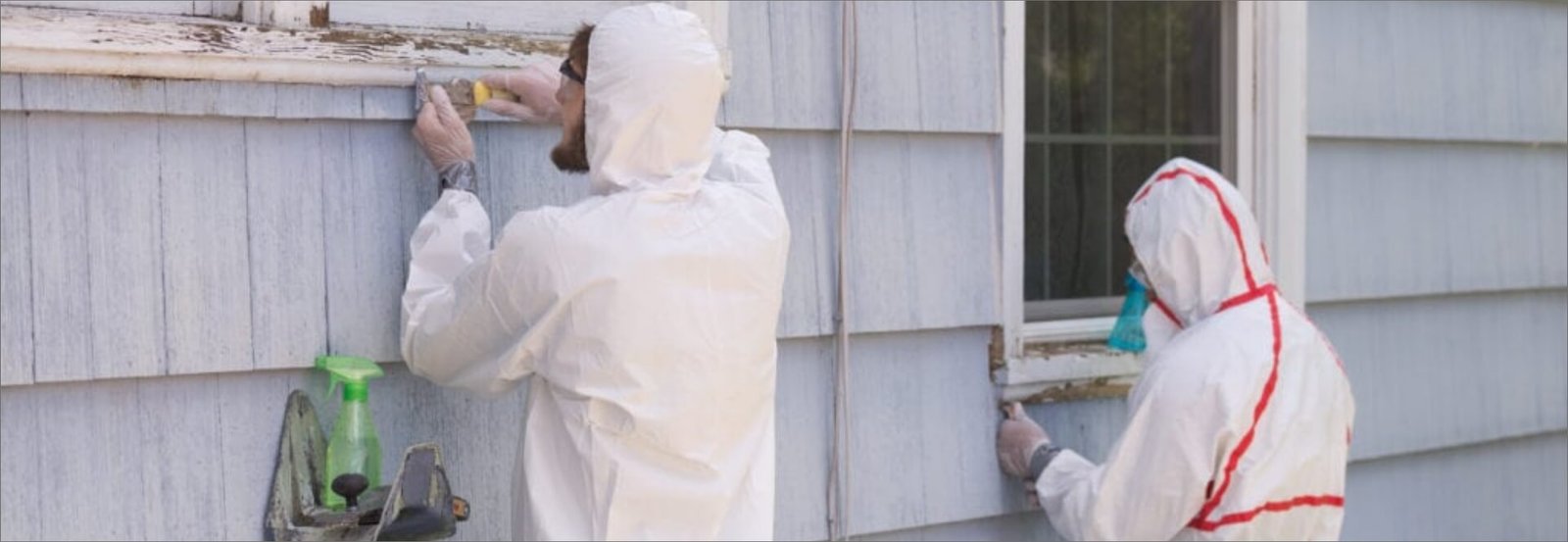
This is classified as a lead hazard. NYC law requires that deteriorated lead-based paint be repaired using lead-safe work practices as required under EPA’s Renovation, Repair, and Painting Rule. All repair work must be performed by EPA-certified contractors. Our EPA-certified lead paint inspectors can walk you through exactly what your report means and what needs to happen next. After repairs, clearance testing using dust wipe sampling is required to confirm no lead dust contamination remains.
If a child under six lives in the unit:
The timeline for corrections tightens significantly. HPD prioritizes enforcement in units with young children. If lead hazards are present in these units and not corrected within mandated timeframes, the city can escalate to emergency abatement orders, where the city arranges the work and bills the owner directly.
HPD Violation Structure: What You’re Actually Facing
For property owners, the most tangible consequence of a failed XRF lead test in NYC is what happens on the HPD side.
HPD classifies housing violations into three categories based on severity. Lead-related issues typically generate Class C violations, the highest severity classification in the city’s system, labeled as “immediately hazardous.”
Here is how the HPD violation timeline works for Class C lead-based paint violations under current enforcement:
Lead-based paint and recordkeeping violations: Owners have 21 days from the date the violation is served to correct the condition and certify the correction to HPD.
All other Class C violations: Standard Class C violations carry a 24-hour correction window.
Civil penalties post-December 8, 2023: Following updates under Local Law 71, civil penalties for violations issued on or after December 8, 2023 have increased substantially. Fines now range from $1,000 to $5,000 per violation and compound daily when violations remain uncorrected. HPD has documented cases where a single property owner received over $150,000 in civil penalties across multiple properties for lead-based paint violations.
This is why lead violation removal handled promptly, with proper documentation, is always less expensive than letting violations sit open. The financial exposure grows every day.
One critical point: HPD will not accept partial testing. If you tested most units but not all, the untested units are treated as fully non-compliant. The enforcement standard is all-or-nothing for applicable buildings.
Remediation Process After a Failed Lead Paint Test
Once lead-based paint is identified and corrective action is required, property owners have three main approaches available under NYC rules.
Lead Paint Abatement
Full lead abatement involves the permanent elimination of lead hazards. This can mean removing lead-painted components entirely, such as replacing windows, doors, or trim, chemical stripping of lead paint down to bare substrate, or enclosure with hard surfaces that permanently seal the paint underneath. Abatement must be performed by contractors certified under EPA’s lead abatement contractor program. After abatement, clearance testing is mandatory.
Encapsulation
Encapsulation involves applying a specially formulated coating over intact lead-painted surfaces that bonds and creates a durable barrier. This is considered an interim control rather than full abatement. It reduces exposure risk but requires ongoing monitoring to ensure the encapsulant remains intact. For surfaces that experience high friction or impact, such as window tracks or door frames, encapsulation alone is typically not sufficient.
Interim Controls with Ongoing Maintenance
For intact lead paint in genuinely stable condition, the regulatory path often involves documentation, monitoring, and a written lead management program rather than immediate physical removal. This approach only works when the paint is provably stable and not creating a dust or ingestion hazard.
Clearance Testing
This involves collecting dust wipe samples from floors, window sills, and window troughs in the work area. These samples are analyzed by an accredited laboratory for lead dust loading. The property cannot be certified as safe for re-occupancy until clearance results confirm that lead dust levels fall below the applicable EPA and NYC standards. For properties dealing with broader lead dust remediation, this step is particularly critical because lead dust is the primary pathway for exposure in occupied residential units.
Also Read: How XRF Lead Testing Helps Avoid HPD Violations in NYC?
How to Respond to an HPD or DOH Lead Violation
If your property has already received a violation, the response sequence matters considerably.
Do not ignore it. Class C violations do not expire. They stay on the property record, accrue financial exposure, and become a growing problem with every day they remain open. Whether you are dealing with an HPD lead violation or a DOH lead violation, late compliance is factually better than no compliance. HPD considers documented good-faith remediation efforts when escalating enforcement decisions.
Hire a certified contractor for repair work. Performing lead paint repairs without the required EPA certification is itself a violation of federal RRP rules and exposes the owner to additional penalties. The contractor must follow lead-safe work practices including containment, worker protection, and proper disposal.
Conduct clearance testing after the work is done. The clearance test must be performed by an EPA-certified lead inspector who is independent of the contractor who performed the remediation. This separation is required by both NYC and EPA rules.
Certify the correction with HPD. After clearance testing confirms the work is complete, the property owner must submit certification of correction to HPD within the mandated timeframe. Until this step is completed, the violation remains open on the record regardless of whether the physical work is done.
Update and store documentation. All records related to the inspection, remediation, clearance testing, and HPD certification must be stored for 10 years and be available to HPD, tenants, and prospective buyers upon request.
For properties with HPD turnover violations, specifically the 623 violations that arise during tenant changeovers, our dedicated Violations 623 service addresses these requirements separately from standard LL31 compliance work.
The Exemptions Available After a Positive XRF Test
Not every positive result leads to unlimited ongoing obligations. NYC law provides two certification pathways that reduce the long-term compliance burden for property owners who take the right steps.
Lead-Free Certification: If XRF lead testing in NYC confirms that no surfaces in the unit contain lead-based paint at or above the 0.5 mg/cm² threshold, the unit qualifies for a Lead-Free Exemption. A Lead-Free certified unit is exempt from most ongoing lead-safe maintenance obligations under Local Law 1. This is the highest-value exemption available and the one that eliminates the most long-term compliance burden.
Lead-Safe Certification: If lead-based paint is present but is in stable condition and all required lead-safe maintenance practices are in place, a unit can receive Lead-Safe certification. This still requires documentation and periodic monitoring but reduces the more burdensome ongoing inspection requirements.
Both exemption applications require official lead paint inspection reports and documentation that testing was conducted by a qualified EPA-certified inspector. HPD will not accept self-reported results or testing by unqualified parties.
Stay Compliant with NYC Lead Regulations with Manhattan Lead
If your property received a positive result from XRF lead testing in NYC, or if you have not yet completed required testing under Local Law 31, the next step is not to wait and see what HPD does next.
At Manhattan Lead, our EPA-certified lead paint inspectors handle the full process for NYC property owners, from initial lead paint testing and XRF inspections to lead violation removal and compliance documentation that HPD actually accepts. We work with residential landlords, property managers, co-op boards, and individual homeowners throughout Manhattan, Brooklyn, Queens, the Bronx, and Staten Island.
Whether you are facing an open HPD lead violation, a DOH lead violation, a lead abatement project, or a lead dust remediation need, our team knows what HPD expects and how to move a property from violation status to certified compliance without unnecessary delays.
Call Manhattan Lead at to schedule your inspection.