A Child in Your Building Has Tested Positive for Lead — What Happens Next?
If a tenant’s child has been diagnosed with an elevated blood lead level (EBLL), your building is about to receive serious attention from New York City agencies. The clock starts immediately. As a property owner, landlord, or building manager, understanding your legal obligations — and acting quickly — is the difference between resolving the situation efficiently and facing compounding penalties, emergency repair orders, and potential litigation.
This guide walks you through exactly what to expect, what you are required to do, and how to protect yourself, your property, and your tenants.
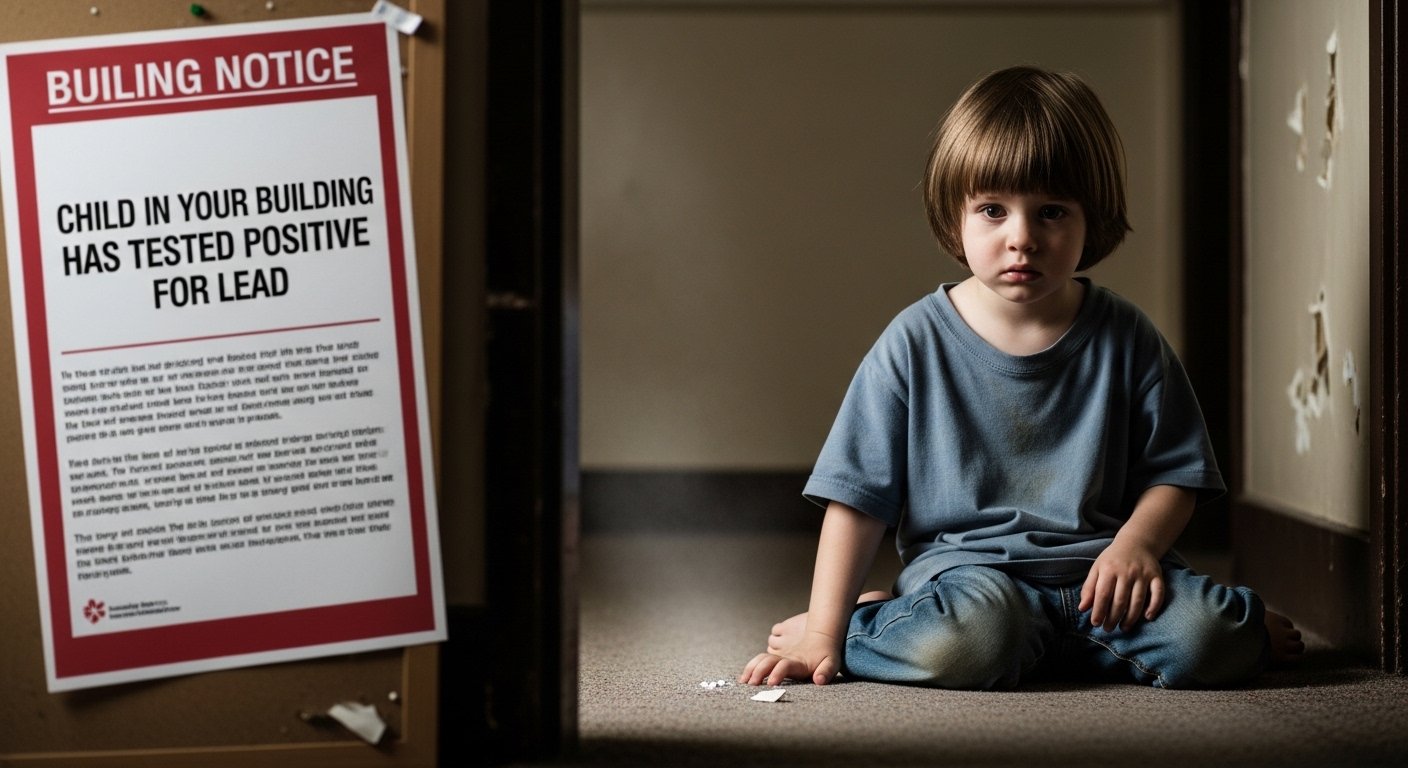
How the City Finds Out — And Why It Happens Fast
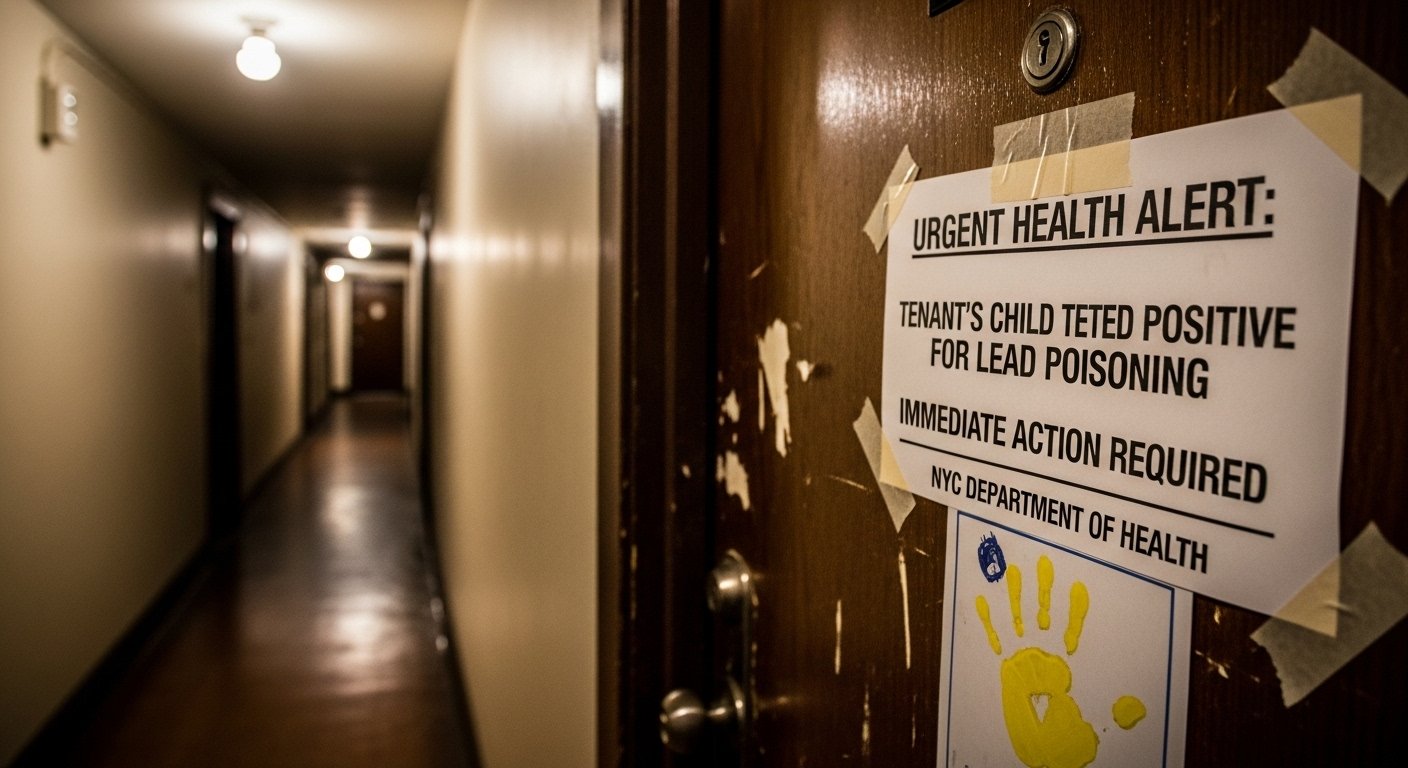
When a child under six tests positive for lead at 5 µg/dL or higher, their doctor or testing laboratory is legally required to report it to the NYC Department of Health and Mental Hygiene (DOHMH). This is mandatory — it happens automatically, without any action by the tenant.
Once DOHMH receives that report, an environmental investigation of your building is initiated. This is not optional, and it is not something you can delay or prevent. What you can control is how prepared and cooperative you are when the inspector arrives — and how quickly you move to remediate once violations are issued.
The DOHMH Environmental Investigation
A DOHMH lead inspector will conduct an on-site investigation of the affected unit and potentially other areas of your building. During the inspection, expect the following:
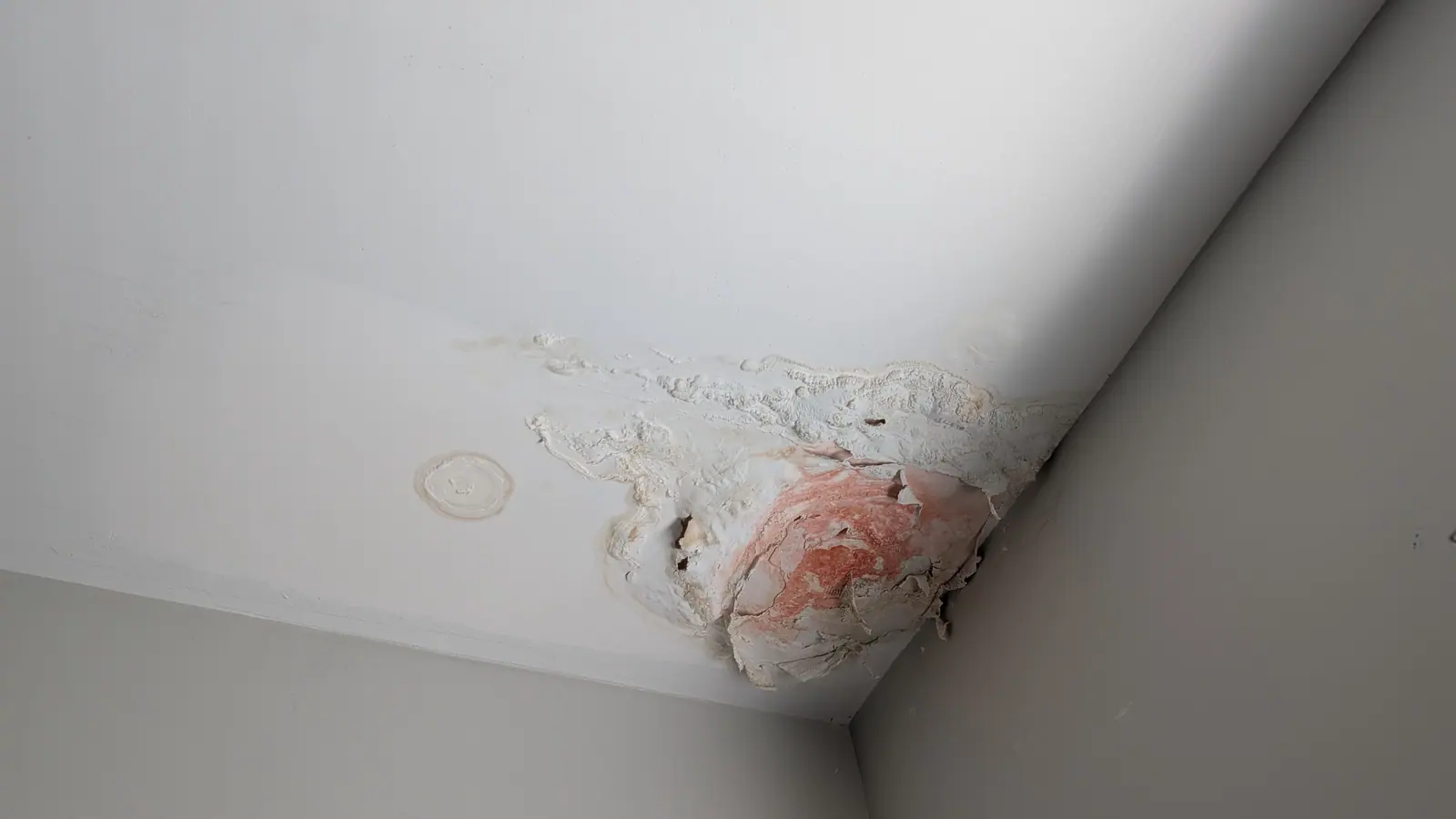
- Visual inspection of all painted surfaces for deterioration, peeling, chipping, or chalking
- XRF testing of painted surfaces to confirm the presence of lead-based paint
- Dust wipe sampling from floors, window sills, and window wells
- Inspection of friction and impact surfaces — windows, doors, and baseboards where lead dust is most commonly generated
- Investigation of common areas if the source of exposure is not confined to the unit
Results from dust wipe samples are compared to NYC’s current clearance standards:
| Surface | NYC Clearance Standard |
| Floors | 5 µg/ft² |
| Window Sills | 40 µg/ft² |
| Window Wells | 100 µg/ft² |
Note that these NYC thresholds are significantly stricter than older federal HUD standards. If hazards are identified, DOHMH will issue violation orders directly to the property owner.
Violation Orders: What You Will Receive and What They Mean
Depending on what the investigation finds, you may receive violation orders from DOHMH and from HPD (Housing Preservation and Development). Each carries its own compliance requirements and deadlines.
DOHMH Orders
The DOHMH may issue an Order to Abate requiring you to remediate specific lead hazards identified in the investigation. These orders will specify the exact locations and surfaces requiring remediation, the type of remediation work required, the deadline for completion, and the requirement for certified lead dust wipe clearance testing upon completion.
Failure to comply with a DOHMH order can result in the city performing emergency repairs at your expense, plus civil penalties.
HPD Violation Codes
Following a DOHMH investigation, HPD will typically issue one or more lead-related violation codes against your property. These appear on your building’s HPD record and must be formally cured with documentation. The most common codes issued in this scenario are:
Orders to Correct:
- Violation Code 616 — Lead-based paint hazard identified in an occupied unit; requires remediation and certified clearance testing to cure
- Violation Code 617 — Lead hazard from deteriorated paint or friction/impact surfaces; requires abatement and clearance documentation
- Violation Code 624 — Lead hazard violation following agency inspection; certified dust wipe clearance testing is required to officially close this violation
Each of these violations requires you to complete remediation and submit a certified lead dust wipe clearance report to HPD before the violation will be marked as cured. A landlord’s word that work was done is not sufficient — only a clearance report from a New York State-certified inspector will close the record.
Your Legal Obligations Under Local Law 1
New York City’s Local Law 1 of 2004 places affirmative obligations on owners of multiple dwellings built before 1960 — and pre-1978 buildings where children under six reside. As a covered property owner, you are required to:
- Conduct annual visual inspections of all units where a child under six lives
- Identify and remediate peeling, flaking, or deteriorated lead paint and any lead hazards on friction and impact surfaces
- Maintain records of all inspections and remediation work
- Ensure all work is performed by a New York State-certified lead abatement contractor
- Obtain certified lead dust wipe clearance testing after any remediation work is completed
Ignorance of these requirements is not a defense. If a child in your building has tested positive for lead and an investigation reveals deteriorated lead paint conditions, you will face enforcement regardless of whether you were aware of the hazard.
Turnover Obligations: What You Must Do Before Re-Renting
One of the most commonly overlooked lead compliance requirements involves unit turnover. Under Local Law 1, when a unit that housed a child under six becomes vacant, you must take specific steps before re-renting — even if no violation has been issued.
HPD enforces this through the following turnover violation codes:
- Violation Code 621 — Failure to perform a required lead investigation when a qualifying unit became vacant
- Violation Code 622 — Failure to complete required remediation work identified during a turnover inspection
- https://manhattanlead.com/hpd-turnover-violations-623-manhattan/Violation Code 623 — Failure to perform certified lead dust wipe clearance testing after turnover remediation, prior to re-renting
These turnover violations are issued when owners skip the required steps between tenancies. They are entirely avoidable — but only if you follow the proper process every time a qualifying unit turns over. Receiving a 621, 622, or 623 violation means you are on the city’s radar, and compliance history matters in enforcement decisions.
The Remediation Process: What the Work Involves
Once violations are issued, you must hire a New York State-certified lead abatement contractor to perform the required work. Depending on the nature and extent of the hazards, remediation may include:
- Encapsulation — applying an approved barrier coating over lead-painted surfaces
- Enclosure — installing new building components over lead-painted areas
- Paint removal — chemical or mechanical removal with full containment
- Component replacement — replacing lead-painted windows, doors, or trim entirely
- Friction and impact surface treatment — addressing areas where lead dust is generated through normal use
During all abatement work, the contractor must follow strict lead-safe work practices, including containment, HEPA vacuuming, and wet methods to prevent dust spread. Residents — especially children and pregnant women — should not be present in the work area during active remediation.
Keep your tenants informed throughout this process. Communication reduces conflict, demonstrates good faith, and helps you avoid additional complaints to city agencies.
Clearance Testing: The Step That Officially Closes Your Violations
This is where many property owners make a costly mistake: assuming that completing the abatement work is enough. It is not.
After remediation is complete, certified lead dust wipe clearance testing must be performed by a New York State-certified lead inspector or risk assessor who is independent from the abatement contractor. This separation is required to ensure objectivity — the same contractor who did the work cannot certify their own clearance.
Samples go to an accredited laboratory. Results must fall below NYC’s current clearance thresholds:
| Surface | NYC Clearance Standard |
| Floors | 5 µg/ft² |
| Window Sills | 40 µg/ft² |
| Window Wells | 100 µg/ft² |
If samples pass, a formal clearance report is issued. This document is your proof of compliance. It is what you submit to DOHMH to satisfy an abatement order. It is what HPD requires to mark violation codes 616, 617, 621, 622, 623, and 624 as cured. Without it, your violations remain open — and every day they remain open increases your exposure to penalties and emergency repair costs.
If any sample fails clearance, the contractor must perform additional cleaning and re-testing. This is not uncommon and is exactly why independent clearance testing matters — it catches inadequate work before you submit a false certification.
The Cost of Non-Compliance
Property owners who do not take lead violations seriously face significant financial and legal consequences:
- Civil penalties from HPD for open violations, which can escalate over time
- Emergency repair orders — the city can perform the work itself and bill you at a significant premium above market rates
- AEP (Alternative Enforcement Program) designation for buildings with persistent violations, which brings intensive oversight and additional costs
- Litigation — tenants whose children have been harmed by lead exposure may pursue personal injury claims; a history of unaddressed violations is devastating evidence in such cases
- Difficulty refinancing or selling — open lead violations on a property record complicate transactions and can delay closings
Acting promptly and properly — hiring certified contractors, obtaining clearance testing, and submitting documentation — is always less expensive than the alternative.
How Manhattan Lead Helps Property Owners, Landlords, and Managers
Manhattan Lead works directly with property owners, landlords, and building managers throughout New York City to navigate lead compliance efficiently and cost-effectively. Our services include:
- Certified lead dust wipe clearance testing following any abatement or remediation work
- Lead risk assessments and inspections to proactively identify hazards before violations are issued
- Clearance reports accepted by DOHMH and HPD to formally cure violation codes 616, 617, 621, 622, 623, and 624
- Turnover compliance support — helping you meet all required steps when qualifying units become vacant
- DOB compliance documentation when construction or renovation work has disturbed lead paint
- Rapid turnaround to meet your compliance deadlines and minimize tenant disruption
Whether you manage a single building or a large portfolio across all five boroughs, Manhattan Lead provides the certified testing and documentation you need to close violations, satisfy agency requirements, and protect your investment.
Contact Manhattan Lead Today
Contact us today to schedule a certified lead inspection or clearance test. Call (212) 226-1614 — the sooner you act, the sooner your violations are closed, and the better protected you are.