1. XRF Lead Paint Testing Report
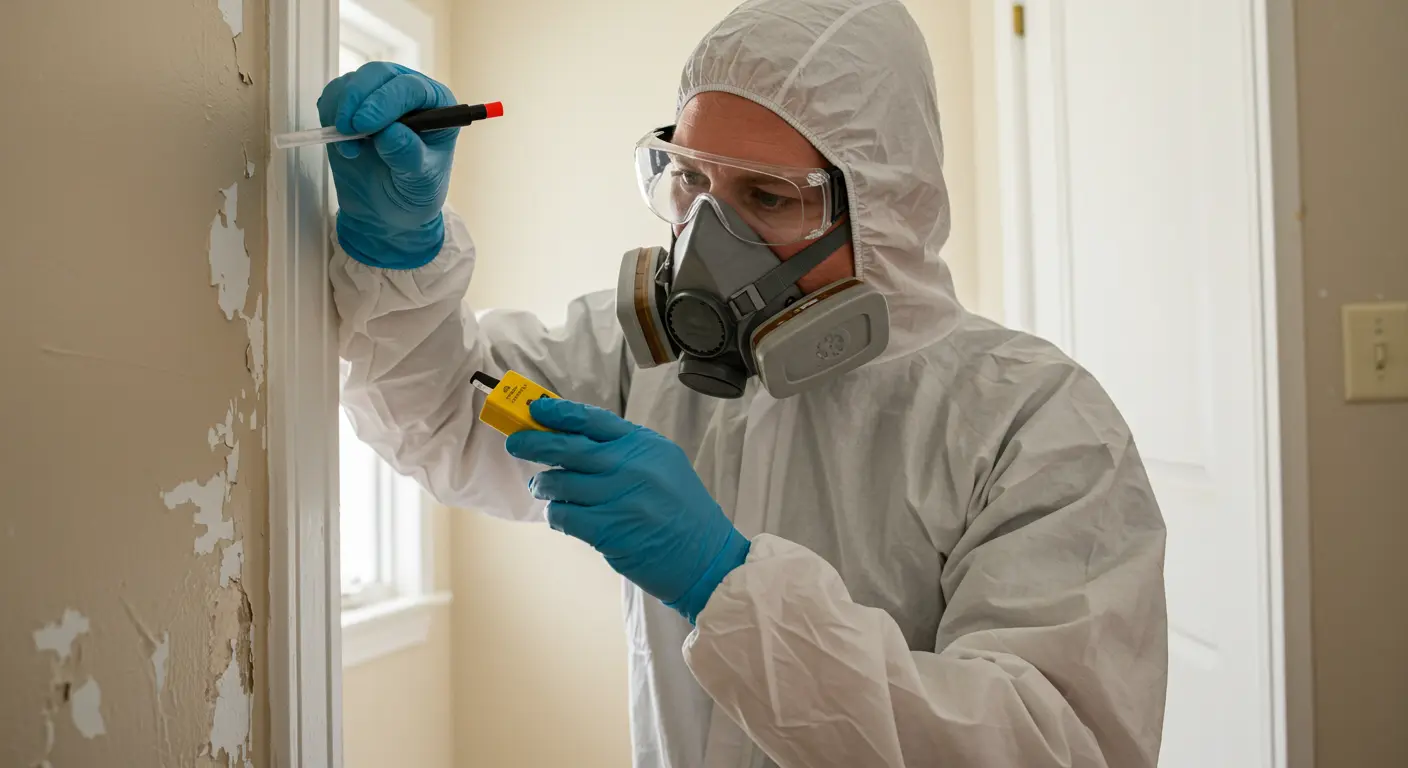
X-ray fluorescence (XRF) testing provides the primary technical evidence of whether an apartment contains lead-based paint. EPA-certified inspectors use a handheld analyzer to measure lead concentrations beneath multiple paint layers without damaging the surface. NYC currently defines lead-based paint as paint containing 0.5 milligrams of lead per square centimeter (mg/cm²) or more.
Your XRF report should contain:
Property details: Building address, apartment number, and inspection date.
Inspection information: Inspector identification, XRF equipment, and tested components.
Recorded readings: Lead concentrations and locations of tested surfaces.
Result classification: Negative, positive, or inconclusive findings.
Testing must cover the relevant painted components, including walls, windows, doors, frames, and trim. Results are classified using the instrument’s approved Performance Characteristic Sheet, which determines how individual readings should be interpreted.
XRF result | What it establishes |
Negative | The tested component meets the criteria for a negative lead-based paint finding. |
Positive | Lead-based paint was identified on the component. |
Inconclusive | Further acceptable evidence may be needed to establish a negative finding. |
HPD requires XRF equipment with an approved Performance Characteristic Sheet at the 0.5 mg/cm² action level for new exemption approvals. Its official paint testing requirements explain the applicable standard. Manhattan Lead provides professional XRF inspections with documented component-level findings, helping NYC property owners establish their apartments’ lead paint conditions.
2. Written Lead Inspection Report and Testing Diagram
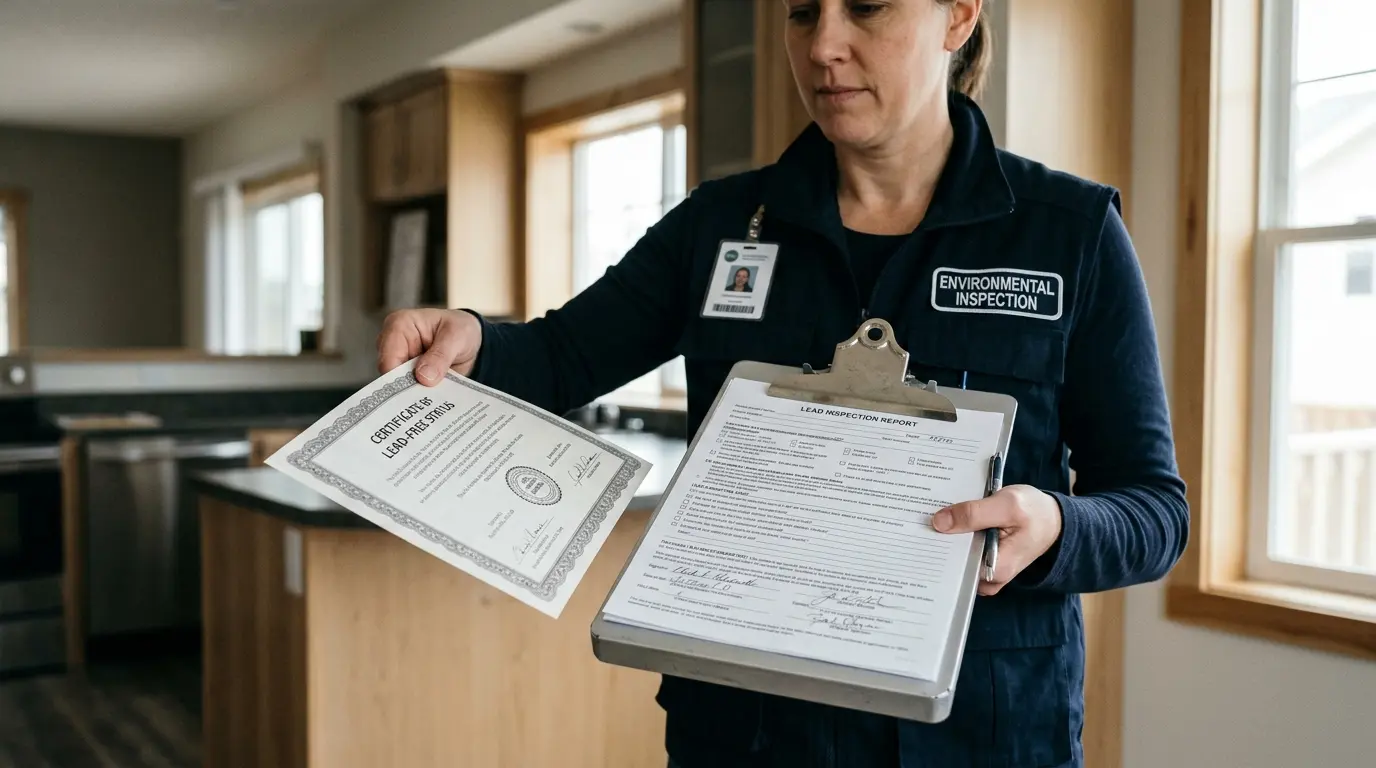
Your written inspection report provides the detailed evidence behind the XRF results. For an HPD Lead-Free Exemption, the inspection documentation must include:
Written Inspection Report: Identifies the apartment, inspection date, tested components, and findings.
Executive Summary: Summarizes the inspection results and any lead-based paint identified.
Testing Diagram: Shows the rooms and components tested, connecting their locations to the recorded XRF readings.
Untested Components: Identifies relevant painted surfaces that were not tested and explains their exclusion where required.
These records help HPD review the inspection’s coverage and connect the findings to the correct apartment. Missing component information or unidentified testing locations can leave gaps in the evidence supporting a lead-free determination. HPD lists these requirements in its Lead Exemption Supporting Documents guidance. Property owners should retain the complete inspection package rather than relying only on a summary stating that the unit passed.
3. EPA Inspector Certification and Lead Testing Affidavit
NYC requires qualifying lead paint inspections to be performed by an EPA-certified lead inspector or risk assessor who is independent of the property owner and any firm hired for lead paint remediation. HPD requires documentation showing that the inspector and inspection firm held valid certifications when testing occurred. For an exemption application, the supporting records include the following:
Document | What it confirms |
EPA Inspector Certification | The individual inspector held the required professional certification. |
EPA Firm Certification | The inspection company was certified when testing was performed. |
Lead Testing Affidavit | The certified professional formally confirms the inspection work. |
HPD requires the appropriate signed and notarized testing affidavit. When the inspector no longer works for the inspection firm, the applicable former-employee affidavit may be required instead. Certification details and affidavit information should correspond with the written inspection report.
4. Lead Free No Abatement Affidavit
Property owners applying for an HPD Lead-Free Exemption need this affidavit when certified testing confirms that no lead-based paint was found and no abatement was necessary. The affidavit confirms the owner's knowledge of the apartment's condition. It also declares that painted surfaces have not been covered or enclosed to hide existing lead paint. Since covering lead paint does not make a unit lead-free, negative inspection results must support the affidavit.
5. Lead Abatement and Clearance Records
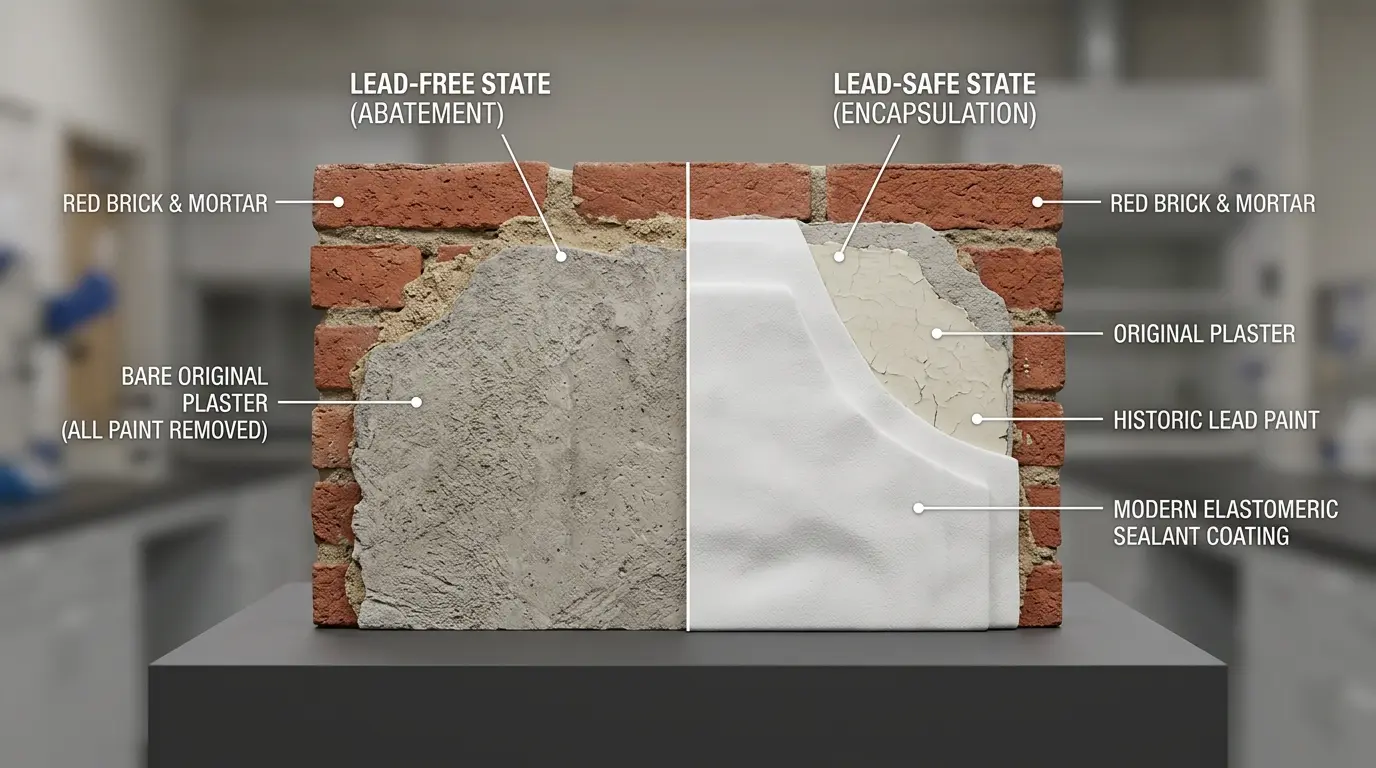
When lead-based paint was previously identified, owners need documentation showing that the affected paint was completely removed or that the relevant components were removed or replaced. Covering existing lead paint through encapsulation or containment does not establish permanent removal for a Lead-Free Exemption.
Supporting evidence may include:
Abatement work records: Identify the affected surfaces and removal or replacement work performed.
Contractor certifications and affidavits: Confirm who performed the work and provide the required formal documentation.
Post-abatement inspection findings: Establish whether the relevant painted components meet the lead-free standard.
Dust wipe clearance results: Show whether sampled surfaces met the applicable lead dust clearance criteria.
HPD also requires the applicable Lead Free Abatement Affidavit, Affidavit by Lead Abatement Firm, and dust wipe sampler documentation. Clearance results support the work records but do not independently establish that every painted component is free of lead-based paint. NYC’s Lead-Free Exemption rules under 28 RCNY § 11-08 distinguish permanent paint removal from methods that leave lead-based paint covered. Owners should retain both the completed work records and the final inspection findings to establish the apartment’s condition after abatement.
6. Paint Chip Laboratory Test Results
Paint chip laboratory analysis provides additional evidence when XRF testing produces an inconclusive reading. NYC’s exemption rules treat inconclusive XRF readings at the 0.5 mg/cm² standard as positive for lead-based paint. However, laboratory testing of a paint sample from the same surface can establish a negative result.
Three supporting records may be needed: state-certified laboratory analysis, a paint chip sample collection sheet, and the chain of custody. Together, these documents identify the sampled component, report the laboratory findings, and record how the sample was collected and handled. For example, an inconclusive XRF reading from a bedroom door frame must be addressed using evidence related to that specific surface. Negative laboratory results from another component cannot automatically establish that the original frame is lead-free.
Paint chip testing is therefore additional proof for particular inspection findings, not a requirement for every apartment. Manhattan Lead offers paint chip sampling and laboratory testing services when further analysis is necessary.
7. HPD Lead-Free Exemption Approval
HPD Lead-Free Exemption approval provides official confirmation that a specific apartment or area has received exemption status. Certified XRF reports establish the testing findings, but negative results alone do not mean HPD has granted an exemption. Owners should retain the final approval and verify that it covers the correct unit.
Older exemption approvals require additional attention. NYC lowered its lead-based paint threshold from 1.0 mg/cm² to 0.5 mg/cm² on December 1, 2021. Exemptions granted under the former standard remain valid until qualifying tenant turnover, when the existing tenant vacates the unit. Lease renewal alone does not count as turnover. Property owners relying on older exemption records should check the original testing standard and tenancy history before treating those documents as current proof of exemption status.
Does Every NYC Apartment Need the Same Lead-Free Proof?
No. Documentation requirements depend on whether lead-based paint was found, whether abatement was performed, and whether the owner is applying for official exemption status.
Apartment condition | Proof generally needed |
No lead-based paint found | Certified XRF findings, written inspection records, professional certifications, and applicable no-abatement affidavits. |
Lead paint found and permanently removed | Abatement records, contractor affidavits, post-abatement inspection findings, and applicable clearance documentation. |
Inconclusive XRF results | Additional acceptable testing evidence, such as paint chip laboratory findings. |
HPD approval is necessary when an owner wants an official Lead-Free Exemption rather than simply maintaining proof of completed testing. Each document should correspond with the apartment’s actual inspection and work history.
How Long Must You Keep Proof That Your Apartment Is Lead-Free?
NYC HPD requires property owners to retain lead-based paint testing records, EPA certifications, and related affidavits for at least 10 years. Applicable records must also be provided to HPD when requested, including inspection findings, laboratory results, and exemption documentation.
Owners should organize these records by property address and apartment number, especially when managing multiple units. Relevant lead paint documentation must also be transferred when ownership changes, as explained in HPD’s testing and recordkeeping requirements.
Frequently Asked Questions
Is an XRF report alone enough to prove an apartment is lead-free?
Certified XRF results can establish whether the tested painted components meet NYC’s lead-free standard. However, an official HPD Lead-Free Exemption requires approval supported by the applicable inspection records, certifications, and affidavits.
Can an old lead inspection report still serve as proof?
Yes, older reports may satisfy certain NYC testing record requirements. However, testing performed at the former 1.0 mg/cm² standard does not automatically establish eligibility for a new exemption under the current 0.5 mg/cm² standard.
Can a home lead test kit prove an apartment is lead-free?
No. Consumer lead test kits cannot replace the EPA-certified XRF inspection required under NYC’s applicable lead paint testing rules. Professional testing must follow the appropriate procedures and provide documented results.
Is a lead dust clearance report enough to prove a unit is lead-free?
No. Dust wipe clearance testing establishes whether sampled surfaces meet applicable lead dust criteria. Separate inspection evidence is needed to determine whether painted components contain lead-based paint.
How can you verify an apartment’s HPD Lead-Free Exemption?
Request HPD’s official exemption determination for the specific apartment and confirm that the approval remains valid. Owners should check older exemptions carefully because qualifying tenant turnover affects approvals granted under the former lead paint standard.
Get the Right Proof That Your NYC Apartment Is Lead-Free
Establishing lead-free status requires certified testing and documentation that accurately reflects your apartment’s condition. Missing inspection findings, incomplete affidavits, or outdated exemption records can make it difficult to demonstrate the property’s status when HPD requests proof.
At Manhattan Lead Inspections, we provide independent EPA-certified lead paint inspections, XRF testing, paint chip sampling, and dust wipe clearance testing for property owners across Manhattan, Brooklyn, Queens, the Bronx, and Staten Island. Our team helps landlords and property managers obtain clear testing findings and the documentation relevant to their properties.
Need reliable proof of your apartment’s lead-free status? Contact Manhattan Lead to arrange professional testing and obtain the inspection records needed to support your property’s lead-free determination.