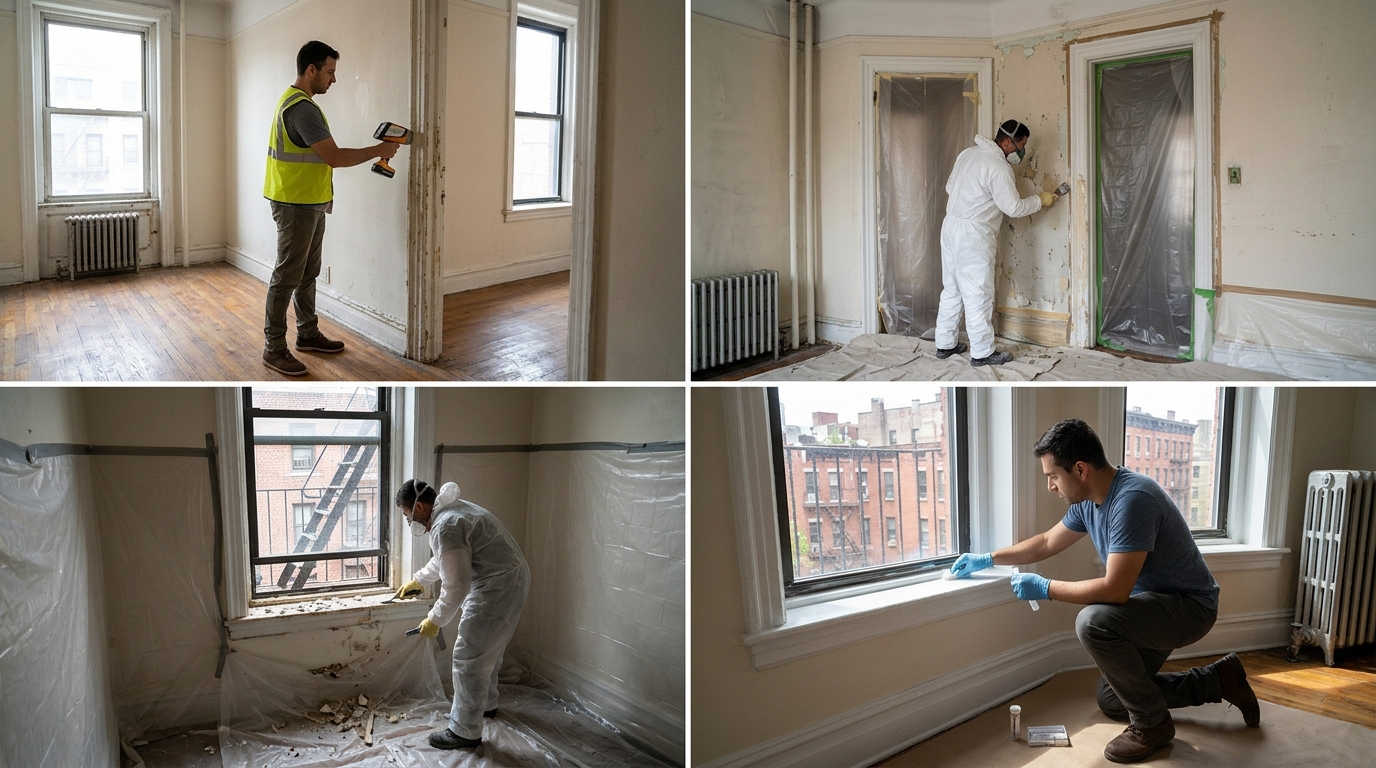

A new lease in an older New York City building comes with more than keys and a signed contract. When it comes to lead paint before tenant move-in in NYC, landlords must confirm the unit's lead status, complete any required lead work, provide the federal lead disclosure and EPA pamphlet, and give the NYC lease notice and Health Department pamphlet. Every step must be finished before the tenant moves in.
Federal and city rules overlap, which makes it easy to miss a step. Many violations come from paperwork gaps instead of paint problems, so a clear move-in routine protects both your tenants and your building record. The steps below follow the order most landlords handle them, from checking records to handing over the final documents.
Which NYC Rentals Must Follow Lead Paint Rules Before Move-In
Two sets of rules apply to older NYC rentals, and each covers a slightly different group of buildings. Your rental generally falls under these rules if it meets one of the following conditions:
Federal Rules: Most housing built before 1978
NYC Rules: Rental buildings built before 1960
NYC Rules: Buildings built from 1960 to 1978 with known lead-based paint
The federal disclosure rule has a few common exemptions, including units with no separate bedroom, leases of 100 days or less, and housing certified lead-free by a certified inspector. NYC requirements are separate, so a unit exempt from the federal disclosure may still need to meet Local Law 1.
Federal vs NYC Lead Rules at a Glance
Federal and city requirements work side by side, but they differ in scope, testing, and recordkeeping. The comparison below shows how the two rule sets line up.
Factor | Federal Disclosure Rule | NYC Local Law 1 |
Buildings Covered | Most housing built before 1978 | Rentals built before 1960, or from 1960 to 1978 with known lead paint |
Testing Required | Not required | XRF testing of all units and common areas |
Work Required Before Move-In | None | Turnover work and independent dust clearance |
Tenant Materials | EPA pamphlet, Lead Warning Statement, and disclosure form | Lease notice and Health Department pamphlet |
Record Retention | At least 3 years | At least 10 years |
The federal rule focuses on giving tenants information, while NYC law requires actual testing and work. Meeting one set of rules does not satisfy the other, so landlords in older buildings need to follow both.
Step 1: Confirm the Unit's Lead Paint Status
Before you list or show the apartment, check what your records say about lead in the unit. This step decides how much work and paperwork the move-in will require.
Check for a Valid Lead Free Exemption
A Lead Free exemption granted by HPD under today's 0.5 mg/cm² standard relieves the unit from turnover work and other ongoing Local Law 1 duties. Exemptions issued under the older 1.0 mg/cm² standard work differently and are automatically revoked at the first turnover after December 1, 2021.
When a unit with an old exemption becomes vacant, notify HPD by filing the Affidavit of Turnover in an Exempted Unit (AF-11). From that point, the unit must meet every Local Law 1 requirement until it is retested and granted a new exemption.
Review Existing XRF and Inspection Records
Local Law 31 required owners to complete XRF testing of all units and common areas in covered buildings by August 2025. Before move-in, pull these results along with these records:
Past lead inspection reports
Previous turnover work records
Dust clearance test results
Any open HPD lead violations
These records show which surfaces contain lead and what work has already been done. They also form the basis of the disclosures you will give the new tenant.
Step 2: Complete Required Lead Work Before the Lease Starts
Units in covered buildings must be made lead safe before a new tenant takes occupancy. This turnover work applies to every new tenancy, with or without a child under six in the household. Before the lease begins, owners must:
Repair peeling paint and underlying defects
Abate lead paint on door and window friction surfaces
Make bare floors, windowsills, and window wells smooth and cleanable
Pass an independent dust clearance test
Each task follows specific Local Law 1 standards and must be completed using safe work practices. Once the work is done and the unit passes dust clearance, the apartment is ready for the paperwork steps that follow.
Step 3: Provide the Federal Lead Disclosure
Federal law requires landlords of pre-1978 housing to share lead information before the tenant signs the lease. Handling lead paint before tenant move-in in NYC means completing each of these federal disclosure elements on time.
Lead Warning Statement in the Lease
Every covered lease must include the federal Lead Warning Statement, either within the lease or as an attached disclosure form. The statement explains that housing built before 1978 may contain lead-based paint, that lead from paint, chips, and dust can pose health hazards, and that exposure is especially harmful to young children and pregnant women.
Landlords should use the exact federal wording without shortening or changing it. If any part of the lease is written in a language other than English, the warning and disclosure must also appear in that language. The EPA and HUD publish sample disclosure forms in English and Spanish that include the required statement.
Disclosure of Known Lead Paint and Hazards
Landlords must disclose any known lead-based paint or lead-based paint hazards in the unit. A complete disclosure typically covers these points:
Where lead-based paint is located in the unit
The condition of the painted surfaces
How the landlord knows lead is present
A clear statement of no knowledge, if none exists
Your XRF results from Step 1 usually shape this disclosure, since they show exactly which surfaces contain lead. The federal rule does not require testing or removal, but any lead information you already have must be shared with the tenant.
Available Records and Reports
Landlords must provide the tenant with all available records and reports about lead-based paint and hazards, or state that none exist. This can include XRF inspection reports, risk assessments, abatement records, and dust clearance results for the unit. In multi-unit buildings, records covering common areas or building-wide testing may also need to be shared.
Clear, well-organized reports make this step much easier for both you and your tenant. If your lead records are incomplete or scattered across old files, our team at Manhattan Lead can help you build a complete set before the lease is signed. We provide detailed, HPD-ready XRF and clearance reports you can attach directly to your disclosures.
EPA Pamphlet and Signed Acknowledgment
Tenants must receive the EPA pamphlet, Protect Your Family From Lead in Your Home, before they are obligated under the lease. The landlord, the tenant, and any leasing agent involved then sign and date the disclosure form to confirm the tenant received the pamphlet and all required information. Keep the signed form for at least three years after the lease begins.
Federal officials continue to take action when these steps are skipped. In August 2026, the EPA reached a settlement with a property management company that oversaw an apartment complex in Putnam, Connecticut. The agency found that tenants in 11 units never received the EPA pamphlet, a Lead Warning Statement in their lease, or the known information and records about lead paint in their apartments.
Step 4: Give NYC Lease Notices and Tenant Materials
NYC adds its own move-in paperwork on top of the federal disclosure. These documents must be provided with the lease for every covered unit.
Lease/Commencement of Occupancy Notice
This HPD form serves several purposes at move-in. It certifies that the required turnover work was completed, explains the owner’s responsibilities under Local Law 1, and asks the new tenant if a child under six will live in the unit.
The notice must be provided with the lease and again at each lease renewal. HPD offers the form in English and Spanish, and owners must also share turnover documentation with the tenant upon request. The tenant’s answer about young children determines which ongoing Local Law 1 duties apply after move-in, so keep a signed copy with the lease file.
Lead Paint Hazards in the Home Pamphlet
NYC also requires owners to give tenants the Health Department pamphlet, Lead Paint Hazards in the Home, with the lease. The pamphlet covers several key topics for new tenants:
How lead paint and dust can harm young children
Owner responsibilities under Local Law 1
Tenant duties, including returning the annual notice
How to report peeling paint and request repairs
This pamphlet is separate from the federal EPA pamphlet, so tenants in covered NYC buildings should receive both. Keep a record showing that each pamphlet was delivered with the lease.
Copies of Local Law 31 Testing Records
Owners must keep their Local Law 31 XRF testing records and provide copies to tenants. These records show which surfaces in the unit were tested and the lead level found on each one.
Sharing these results at move-in keeps the tenant informed and supports the information in your federal disclosure. Storing reports in an organized digital system makes it easy to hand them over at lease signing, respond to tenant requests, and produce them quickly if HPD asks during an audit.
Step 5: Prepare for Ongoing Duties if a Child Under Six Moves In
When the lease notice shows that a child under six will live in the unit, Local Law 1 adds ongoing duties. A child is considered residing when they routinely spend 10 or more hours per week in the apartment. Owners should plan for these requirements:
An annual notice sent to tenants each January
A yearly visual inspection for lead hazards
Abatement-level work within three years of learning a child under six lives in the unit
Prompt repairs of any peeling paint using safe work practices
Tenants must also notify owners when a child under six begins living in the unit. Once that happens, HPD can respond quickly to complaints, and HPD logged 44,164 problems that prompted lead-based paint hazard inspections in Fiscal 2026, up from 42,774 the year before.
Common Move-In Mistakes That Result in Lead Paint Violations
Most move-in violations come from small oversights that are easy to prevent. Watch for these common mistakes:
Relying on an Old 1.0 Exemption: These exemptions are revoked at turnover, so the unit must meet all Local Law 1 rules until it is retested.
Letting the Contractor Run Clearance Testing: Dust clearance must be performed by a third party independent of the owner and the contractor.
Skipping the Federal Disclosure: NYC paperwork does not replace the EPA pamphlet, Lead Warning Statement, or federal disclosure form.
Losing Records: Missing documentation can be treated as work never done during an HPD audit.
Missing the Child Under Six Question: Without the lease notice answer, owners cannot plan required inspections and abatement work.
Missing documents tend to multiply during an audit. In 2026, HPD reported that audits of a single owner's portfolio uncovered more than 800 Class B and C violations, including nearly 180 lead-based paint violations, after reviewing annual notices, inspection reports, and turnover records. The best protection is a complete paper trail for every unit, and Manhattan Lead helps owners build one by handling lead paint before tenant move-in in NYC with independent XRF testing, dust clearance, and reports prepared for HPD review.
FAQs
Do landlords have to test for lead before a new tenant moves in?
Federal rules do not require testing, but NYC owners of pre-1960 rental buildings had to complete XRF testing of every unit by August 2025. Dust clearance testing is also required after turnover work before the tenant moves in.
Is the federal lead disclosure required for every NYC rental?
It applies to most housing built before 1978. Common exceptions include studios with no separate bedroom, leases of 100 days or less, and housing certified lead-free by a certified inspector. Most older NYC apartments with bedrooms are covered.
What happens if a new tenant has a child under six?
The owner must inspect the unit for lead hazards every year and complete abatement-level work within three years of learning the child lives there. Tenants should report the child on the lease notice so owners can plan these steps.
How long must landlords keep lead disclosure records?
Federal rules require landlords to keep signed lead disclosure records for at least three years after the lease begins. NYC requires owners to keep Local Law 1 records, including turnover work and inspections, for at least 10 years.
Can a landlord give the EPA pamphlet after the lease is signed?
No, the federal rule requires landlords to provide the EPA pamphlet and lead disclosure before the tenant is obligated under the lease. Giving it afterward does not meet the requirement and can lead to federal enforcement.
The Bottom Line
Handling lead paint before tenant move-in in NYC is about getting the timing right as much as the work itself. Records should be reviewed before the unit is listed, required repairs and clearance should be finished before the lease begins, and every federal and city document should reach the tenant at signing. When each step is done in order and backed by organized records, landlords protect their tenants, avoid costly violations, and keep their buildings ready for any HPD review.
A smooth move-in starts with knowing exactly what is in your walls and having the documents to back it up. Manhattan Lead Inspections gives NYC landlords certified lead inspections, laboratory-verified clearance results, and support with Lead Free exemption applications. Our EPA-certified team serves all five boroughs seven days a week, and our client portal keeps every inspection report and HPD violation record in one secure place for future leases.
Make your next lease signing complete and compliant from day one. Call Manhattan Lead at (212) 226-1614 to schedule your pre-move-in lead inspection.