What Is the NYC Lead Paint Annual Notice?
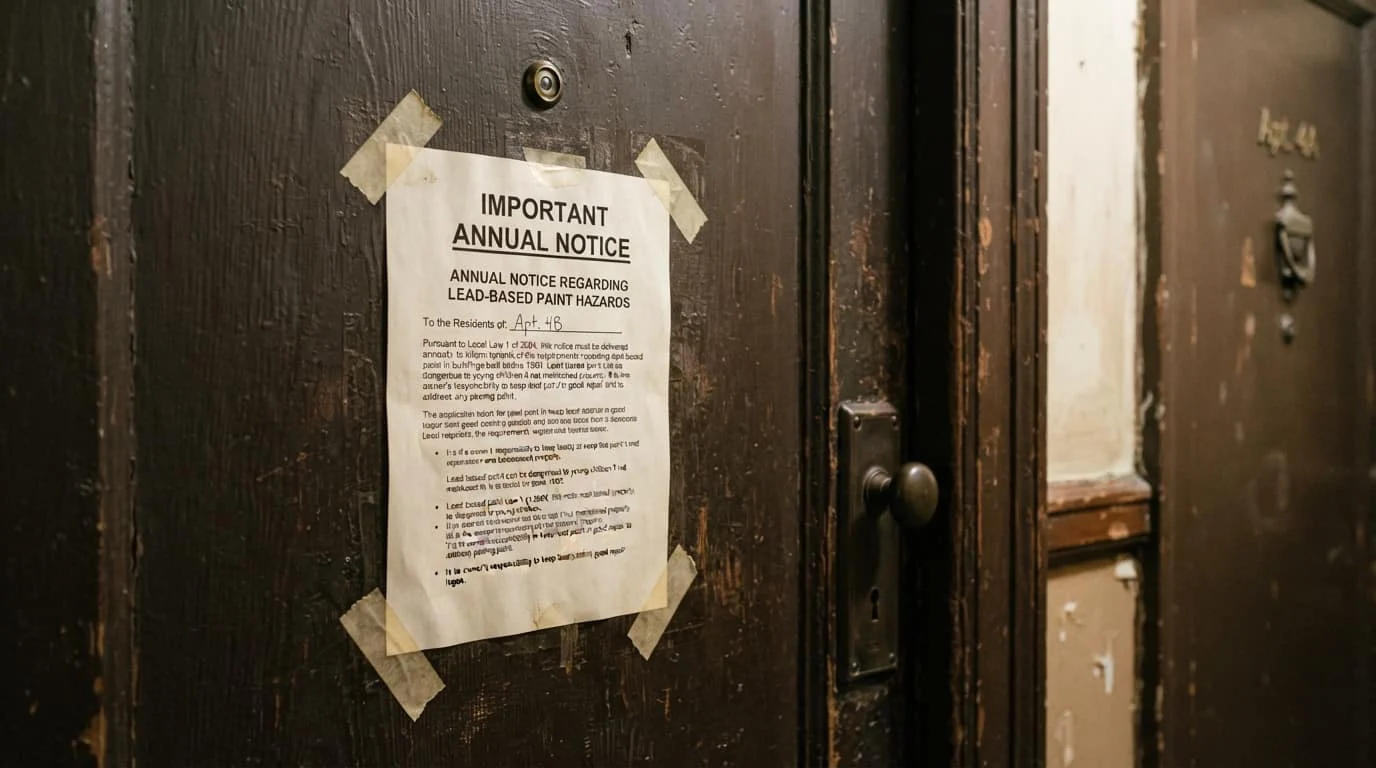
The NYC lead paint annual notice is an HPD-approved inquiry that asks whether a child under six resides in a dwelling unit.
The tenant’s answer helps the owner determine whether additional lead-based paint obligations apply to that apartment. When an owner knows that a child under six resides in a covered unit, the owner must conduct an annual visual investigation for potential lead-based paint hazards and follow applicable rules when repairing deteriorated or peeling paint.
For purposes of this requirement, a child does not have to live in the apartment full-time. HPD considers a child to “reside” in a dwelling unit when the child routinely spends 10 or more hours per week there. That can include a child who regularly visits the apartment, stays with a relative, or receives childcare there.
The notice therefore asks a practical compliance question: Is there a child under six spending enough time in this apartment to trigger additional lead-paint responsibilities?
Which NYC Landlords Must Send the Annual Notice?
The annual-notice requirement generally applies to owners of covered rental housing where New York City’s lead-paint presumption or related requirements apply.
Buildings constructed before 1960
Owners generally must send the notice when the property was constructed before January 1, 1960 and contains:
- A multiple dwelling with three or more residential units; or
- A one- or two-family private dwelling with a tenant-occupied unit.
New York City generally presumes that paint in pre-1960 rental housing may contain lead unless acceptable testing or an HPD exemption establishes otherwise. HPD’s current annual-notice guidance expressly includes both multiple dwellings and tenant-occupied units in one- and two-family homes.
Buildings constructed between 1960 and 1978
Requirements may also apply to rental buildings constructed between 1960 and 1978 when the owner has actual knowledge that lead-based paint is present.
Owners should not assume that a post-1959 construction date automatically ends the analysis. Previous testing, building records, violation history, or other information may establish actual knowledge of lead-based paint.
Rented co-op and condo apartments
A rented co-op or condo apartment may be subject to lead-paint requirements even though the building includes owner-occupied units. Ownership type alone does not necessarily determine whether a rented apartment is covered.
Related XRF testing guidance, for example, distinguishes between owner-occupied units and units rented to people who are not the owner or the owner’s family. Owners and boards should evaluate the status of each unit rather than treating an entire co-op or condo building as automatically exempt.
Units with an HPD Lead-Free Exemption
A unit that has received an approved Lead-Free Exemption from HPD is treated differently. HPD states that owners do not have to provide annual lead notices or conduct annual child-under-six investigations for units granted that exemption.
A negative private inspection report alone is not the same as an exemption. The owner must complete the required testing and application process and receive approval from HPD.
NYC Lead Paint Annual Notice Deadlines
The annual-notice process follows a fixed calendar. Missing one date can affect everything that follows.
| Date | Landlord responsibility |
| January 1–16 | Deliver the approved annual notice to tenants in covered units |
| By February 15 | Collect completed tenant responses and identify nonresponsive apartments |
| February 16–March 1 | Make reasonable attempts to access nonresponsive apartments when the owner does not otherwise know whether a child under six resides there |
| After unsuccessful access attempts | Notify the NYC Department of Health and Mental Hygiene in writing and retain a copy |
| Throughout the year | Investigate newly reported child occupancy, peeling paint complaints, and other conditions that may create lead hazards |
HPD instructs owners to deliver the notice between January 1 and January 16 and collect completed forms by February 15. Owners should document both delivery and receipt rather than relying on an informal tenant list or undocumented mailing.
Which Annual Notice Form Should Landlords Use?
Owners should use an approved notice rather than creating their own questionnaire.
HPD currently identifies two options:
- The Annual Notice for Prevention of Lead-Based Paint Hazards – Inquiry Regarding Child.
- The approved combined Protect Your Child from Lead Poisoning and Window Falls Annual Notice when both lead-paint and window-guard inquiries apply.
The combined form can reduce duplicate paperwork, but owners must use the current version. HPD updated the combined notice in connection with window-guard rule changes that took effect in 2026, so an old saved form should not be reused without checking it against the current HPD version.
HPD also requires the lead notice to be:
- Provided in at least English and Spanish;
- Delivered in duplicate;
- Supplied with one copy for the tenant to retain;
- Supplied with another copy for the tenant to complete and return; and
- Accompanied by clear instructions explaining where and how to return it.
How Should Landlords Deliver and Document the Notice?
The annual-notice process should create a clear paper trail for every covered apartment.
A practical delivery log should identify:
- The building address;
- Apartment number;
- Tenant or occupant name, when available;
- Date the notice was delivered;
- Delivery method;
- Languages provided;
- Name of the employee, agent, or vendor responsible for delivery;
- Date a completed response was received;
- Whether a child under six was reported; and
- Whether follow-up action was required.
Owners should retain proof that each notice was delivered and keep the completed notice returned by the tenant. HPD also provides sample compliance forms for documenting delivery and apartments that did not respond.
For managing agents, the safest approach is to track the process by apartment—not simply by building. A building-level note stating “annual notices sent” may not establish what happened in a specific unit during an audit.
What Happens When a Tenant Reports a Child Under Six?
When a tenant reports that a child under six resides in the apartment, the response triggers additional obligations.
Conduct the annual visual investigation
The owner must perform a visual investigation at least once each year to identify potential lead-based paint hazards.
The investigation should look for:
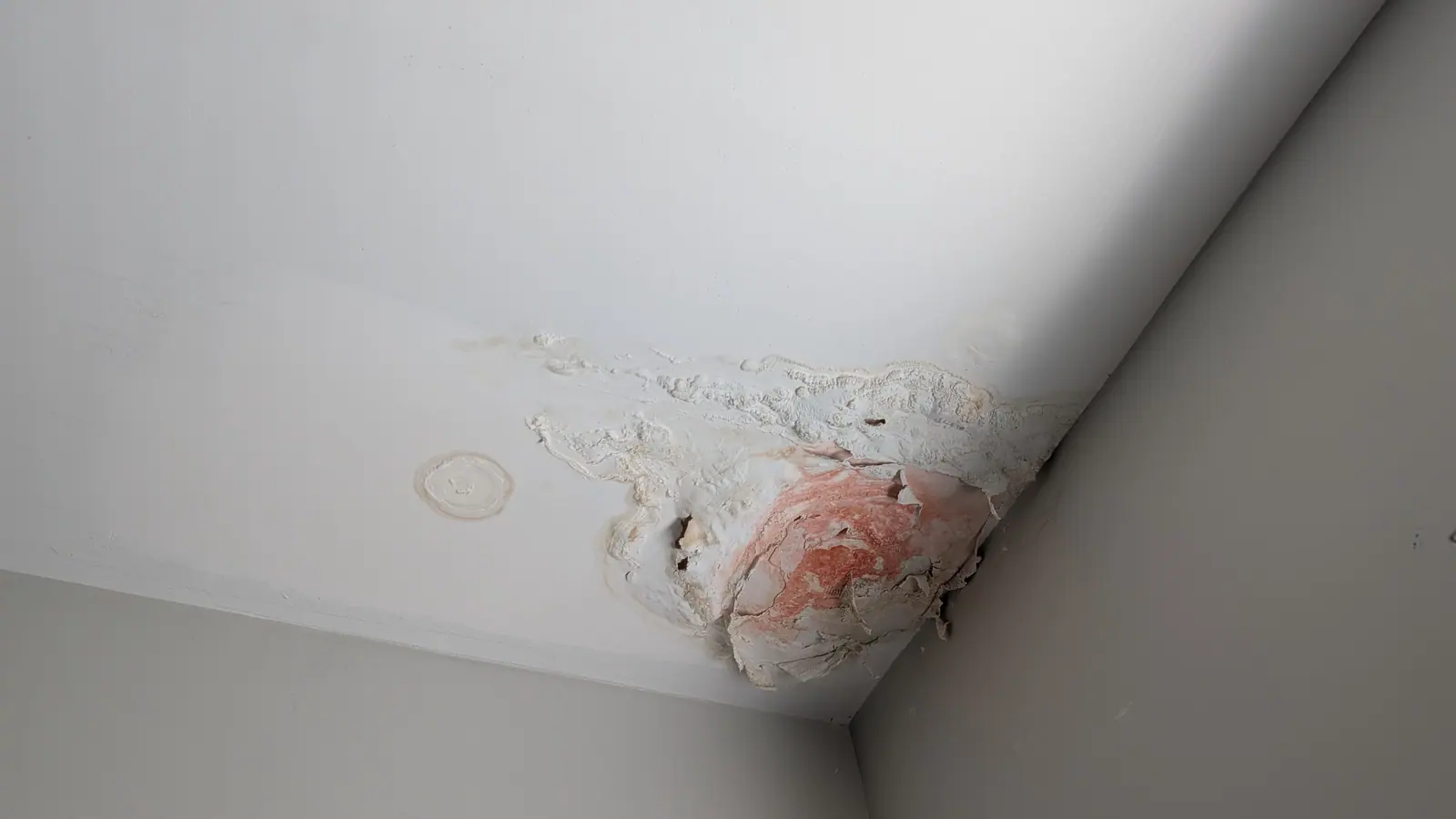
- Peeling or chipping paint;
- Deteriorated painted surfaces;
- Deteriorated subsurfaces;
- Chewable surfaces, including windowsills;
- Friction surfaces, such as doors and windows; and
- Impact surfaces that may produce paint chips or dust.
The visual investigation must cover every painted surface in every room, including painted surfaces inside closets and cabinets. It should not be treated as a quick glance at the walls visible from the apartment entrance.
A licensed inspector is not automatically required for the visual investigation
HPD does not require the annual visual investigation itself to be performed by a licensed lead inspector. However, HPD strongly recommends that the person conducting it complete the federal HUD visual-assessment training.
That distinction matters. An annual visual investigation identifies visible conditions such as peeling paint. It does not determine whether a painted component contains lead. That requires proper lead-paint testing.
Inspect applicable common areas
If a child under six resides in the building, the owner must also inspect applicable common areas for deteriorated painted surfaces. These areas can include:
- Hallways;
- Lobbies;
- Stairwells;
- Shared entry areas; and
- Other painted common spaces.
A landlord who inspects only the child’s apartment may therefore leave part of the annual requirement incomplete.
Document the findings and provide them to the tenant
The person who performs the visual investigation must create written records of what was observed. After the investigation, the owner must provide the occupant with a copy of the results.
The building’s compliance file should show:
- The date of the investigation;
- Who performed it;
- Which rooms and painted surfaces were examined;
- What conditions were found;
- Whether corrective work was required;
- When the results were provided to the tenant; and
- What happened after a problem was identified.
What If the Tenant Does Not Return the Annual Notice?
A nonresponse does not allow an owner to mark the unit as having no child.
When the owner has not received a written response by February 15 and does not otherwise know whether a child under six resides in the apartment, the owner must follow up.
The required process generally includes:
- Record that no written response was received by February 15.
- Determine whether the owner or managing agent already has actual knowledge that a child under six resides there.
- Give reasonable notice of an intended apartment visit.
- Make reasonable attempts to gain access between February 16 and March 1.
- Attempt to determine whether a child under six resides in the unit.
- Document each access attempt and its result.
- Notify the Department of Health and Mental Hygiene in writing if reasonable attempts do not result in access.
- Keep a copy of the notification with the property’s annual-notice records.
HPD’s current page lists the notification address as:
Department of Health and Mental Hygiene — Healthy Homes
125 Worth Street, Sixth Floor, CN58
New York, NY 10013
Owners should confirm the current contact instructions with HPD before submitting time-sensitive correspondence.
What Happens If Peeling or Deteriorated Paint Is Found?
The next step depends on what is known about the painted surface, whether a child under six resides in the apartment or building, and whether an HPD or DOHMH violation is involved.
When peeling paint is found, and the owner does not have acceptable documentation showing whether the surface contains lead, HPD instructs the owner to presume that lead-based paint is present.
The owner should then:
- Correct the deteriorated surface promptly;
- Address underlying causes such as leaks or damaged plaster;
- Use an appropriately certified contractor;
- Follow applicable lead-safe work practices;
- Arrange independent clearance testing when required; and
- Preserve documentation of the work and clearance results.
Painting over a deteriorated condition without addressing the underlying defect does not create a complete compliance record.
HPD also notes that the August 9, 2025 deadline for XRF testing of applicable units and common areas has passed. Owners who have not completed that testing should not assume that sending the annual notice resolves the missing XRF requirement.
Which Records Must Landlords Keep?
A defensible lead-compliance file should contain more than the returned tenant questionnaire.
Depending on the property and the events during the year, owners should retain:
- Proof of annual-notice delivery;
- Copies of the notices distributed;
- Completed tenant responses;
- A list of nonresponsive apartments;
- Access notices;
- Records of attempted entry;
- Copies of DOHMH notifications;
- Annual visual-investigation summaries;
- Detailed investigation records;
- Proof that results were provided to occupants;
- Records of repairs and hazard correction;
- Contractor certifications;
- Safe-work-practice documentation;
- Dust-clearance reports when applicable;
- XRF testing reports;
- EPA inspector and firm credentials;
- Turnover-compliance records; and
- HPD exemption approvals.
New York City property owners are generally required to maintain lead-compliance records for at least 10 years. That includes records related to annual notices, visual investigations, testing, work practices, turnover work, and hazard correction.
Digital records should be organized by building, year, and apartment. A report saved in a former employee’s email account is not useful when HPD requests it years later.
The Annual Notice Is Not the Same as Local Law 31 Testing
The annual notice and Local Law 31 XRF inspection are related, but they serve different purposes.
| Requirement | What it establishes | How often it occurs |
| NYC lead paint annual notice | Whether a child under six resides in the apartment | Every year |
| Annual visual investigation | Whether visible conditions may constitute lead-paint hazards | At least annually in applicable child-under-six units, with additional investigations when triggered |
| Local Law 31 XRF testing | Which painted components contain lead-based paint | Generally a one-time testing obligation, with records retained |
| Lead-Free Exemption | HPD approval removing specified ongoing obligations for the exempted area | Application-based |
As of August 9, 2025, applicable dwelling units and common areas had to be tested using an XRF device by an EPA-certified inspector or risk assessor who is independent of the owner and any firm hired to perform lead-paint remediation.
HPD confirms that XRF testing is not an annual inspection. It is generally completed once, but the testing report, certification records, and related affidavits must be retained for at least 10 years.
That means:
- Sending the annual notice does not cure missing XRF testing.
- Completing XRF testing does not automatically eliminate annual notices.
- A negative XRF result does not, by itself, create an HPD exemption.
- A granted Lead-Free Exemption can remove annual-notice and annual-investigation requirements for the approved unit or area.
Common NYC Lead Paint Annual Notice Mistakes
Even when an owner sends the form, the compliance process may still be incomplete. Common problems include:
- Delivering the notice after January 16.
- Using an outdated or unofficial form.
- Supplying the form in only one language.
- Failing to provide the required duplicate copies.
- Keeping no apartment-level proof of delivery.
- Assuming a nonresponse means no child resides in the unit.
- Failing to make reasonable access attempts between February 16 and March 1.
- Failing to notify DOHMH after unsuccessful access attempts.
- Conducting a visual investigation without documenting the findings.
- Failing to provide the results to the occupant.
- Inspecting the apartment but overlooking applicable common areas.
- Treating the annual notice as a substitute for XRF testing.
- Assuming a negative test automatically creates an exemption.
- Discarding records before the end of the required retention period.
The safest approach is to treat the annual notice as a workflow, not a mailing.
Why Annual-Notice Records Matter During an HPD Audit
HPD can issue a Record Production Order requiring an owner to submit lead-compliance documentation within 45 days.
Requested documents can include:
- Annual-notice distribution and collection records;
- Annual visual-investigation records;
- Repair and hazard-correction records;
- Safe-work-practice documentation;
- Turnover records;
- Dust-clearance results;
- XRF reports; and
- Proof of the inspector’s and testing firm’s EPA qualifications.
HPD states that an owner who does not respond, or responds with incomplete records, may receive immediately hazardous Class C violations. Its current guidance also identifies a civil penalty ranging from $1,000 to $5,000 for failure to comply with the applicable record-production requirement.
Enforcement is not theoretical. In March 2026, HPD announced that it had secured more than $150,000 in civil penalties through lead-based paint recordkeeping enforcement against a specific property portfolio. HPD reported reviewing annual notices, lead inspection reports, turnover documentation, and compliance with lead-safe work practices as part of its audit activity. That figure concerned a particular enforcement action and should not be treated as the automatic penalty for every building.
The broader lesson is straightforward: completing the work without preserving the records can still leave an owner unable to prove compliance.
NYC Lead Paint Annual Notice Checklist for Landlords
Before January 1
- Confirm which buildings and units are covered.
- Download the current HPD-approved notice.
- Prepare the required English and Spanish copies.
- Update the tenant and apartment list.
- Establish a delivery and response-tracking process.
- Assign responsibility for follow-up and visual investigations.
January 1–16
- Deliver the notice to every covered tenant.
- Provide duplicate copies in the required languages.
- Clearly explain where completed notices should be returned.
- Record the date and method of delivery for each apartment.
- Retain proof of delivery.
By February 15
- Collect completed tenant responses.
- Identify apartments where a child under six resides.
- Create a list of apartments that did not respond.
- Review existing records for any actual knowledge about child occupancy.
February 16–March 1
- Provide reasonable notice of access.
- Make reasonable attempts to enter nonresponsive apartments.
- Document every attempt.
- Notify DOHMH in writing when access cannot be obtained.
- Retain a copy of the notification.
After reviewing responses
- Schedule annual visual investigations for applicable units.
- Inspect common areas when required.
- Document all findings.
- Provide occupants with copies of the investigation results.
- Correct deteriorated paint using the proper contractor and work practices.
- File all records in the property’s 10-year compliance archive.
When Should a Landlord Contact a Lead Inspection Company?
A landlord does not necessarily need to hire an XRF inspector simply to distribute the annual notice or perform the basic visual investigation. Professional inspection support becomes important when the property’s actual lead status or testing history needs to be established.
Consider contacting an EPA-certified inspection firm when:
- Required Local Law 31 testing was never completed;
- Previous XRF records cannot be located;
- The owner does not know which painted components contain lead;
- A child under six resides in a unit with deteriorated or untested paint;
- Common areas may not have been tested;
- The property has an HPD or DOHMH lead violation;
- HPD has issued a records request or audit order;
- The owner wants to evaluate eligibility for a Lead-Free Exemption; or
- A managing agent needs consistent inspection records across multiple buildings.
The goal should not be to order unnecessary testing. It should be to determine what the law requires, identify what has already been completed, and close any documented gaps.
Keep the Annual Notice Process Complete and Defensible
The NYC lead paint annual notice is not just a form that landlords send every January. It is the first step in a recurring compliance process.
Covered owners should:
- Deliver the current notice by January 16;
- Collect tenant responses by February 15;
- Follow up properly when tenants do not respond;
- Conduct and document required visual investigations;
- Inspect applicable common areas;
- Correct deteriorated paint safely;
- Preserve records for at least 10 years; and
- Keep annual-notice compliance separate from Local Law 31 XRF testing.
A complete file should allow a landlord or managing agent to show what was sent, what the tenant reported, what the owner investigated, what conditions were corrected, and who performed any required testing or remediation.
Need to Confirm Your Building’s Lead-Testing Status?
Manhattan Lead provides independent, EPA-certified XRF lead-paint inspections for NYC landlords, property owners, and managing agents. Our team can help determine whether required testing has been completed and provide clear inspection documentation for your property records.
Call us to discuss your building or request an inspection estimate.
When must NYC landlords send the lead paint annual notice?
Covered owners must deliver the notice to tenants between January 1 and January 16 each year. Completed tenant responses should be collected by February 15.
Who must receive the annual notice?
The notice generally must be sent to tenants in covered pre-1960 rental housing, including multiple dwellings and tenant-occupied units in one- and two-family homes. Requirements may also apply to certain 1960–1978 buildings where the owner knows lead-based paint is present.
What does it mean for a child under six to reside in an apartment?
A child is considered to reside in the unit when the child routinely spends 10 or more hours per week there. The child does not have to live in the apartment full-time.
What happens if a tenant does not respond by February 15?
When the owner does not otherwise know whether a child under six resides in the unit, the owner must make reasonable attempts to gain access between February 16 and March 1. If access cannot be obtained, the owner must notify DOHMH in writing and retain a copy of that notification.
Is the annual notice the same as Local Law 31 XRF testing?
No. The annual notice is a yearly inquiry about child occupancy. XRF testing determines whether painted components contain lead-based paint and is generally a one-time inspection requirement rather than an annual test.
Does a landlord need to hire an inspector for the annual visual investigation?
HPD does not require a licensed professional to perform the basic annual visual investigation, although it strongly recommends HUD visual-assessment training. A certified professional is required for regulated testing and other specialized lead work.
Must landlords inspect common areas?
Yes, applicable common areas such as hallways, stairwells, and lobbies must also be visually investigated when a child under six resides in the building.
How long must annual-notice records be retained?
NYC owners are generally required to retain lead-compliance documentation for at least 10 years.
Does a negative XRF test eliminate the annual-notice requirement?
Not automatically. The owner generally must apply for and receive an HPD Lead-Free Exemption before annual-notice and annual-investigation requirements are removed for the applicable unit or area.
Can the lead notice and window-guard notice be combined?
Yes. Owners may use an approved combined form when both requirements apply. Because the combined notice was updated for 2026, owners should confirm they are using the current HPD-approved version.