Which NYC Buildings Must Follow Lead Paint Rules?
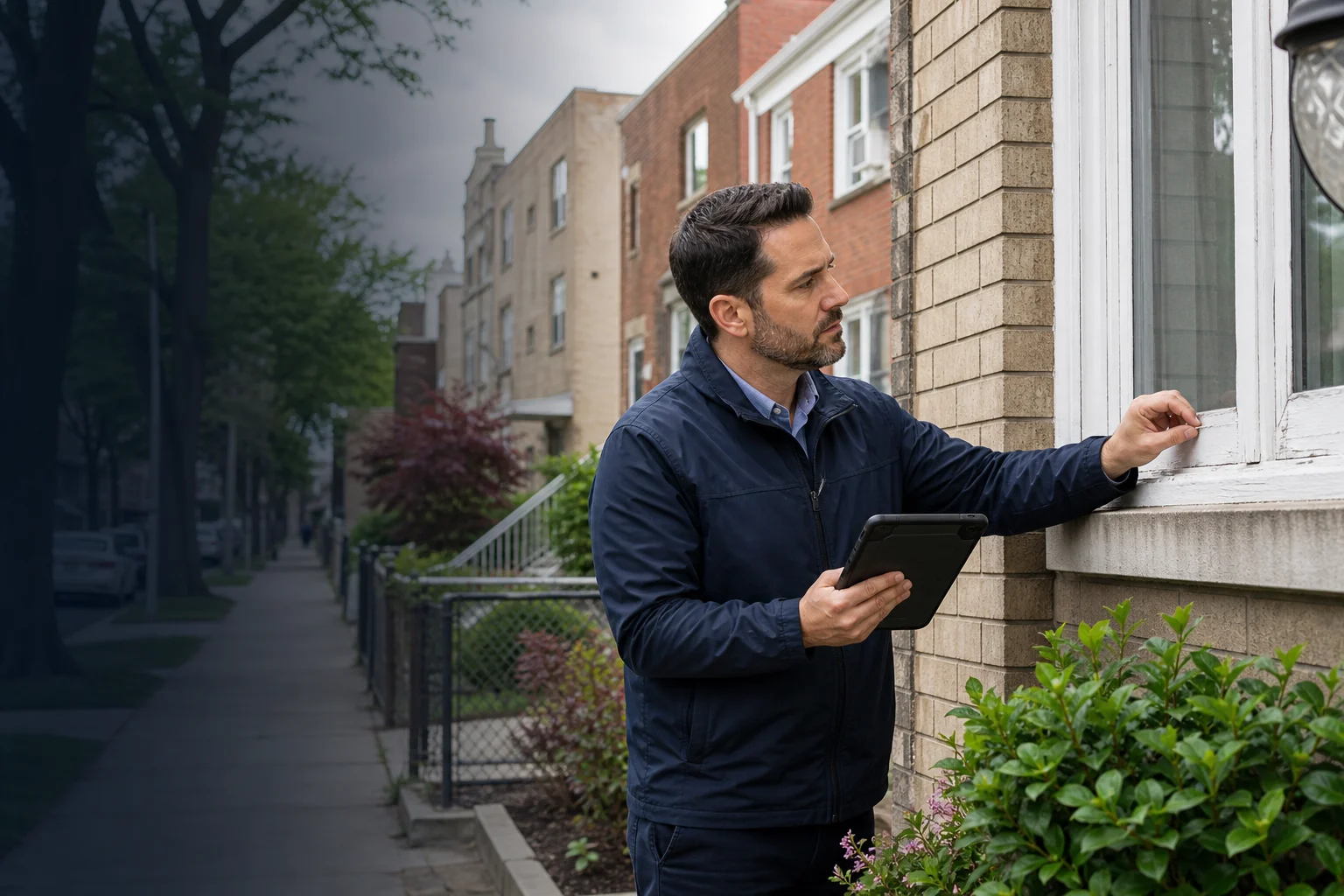
Local Law 1 of 2004 is New York City's main lead paint law, and it applies to specific types of residential properties. Before looking at exemptions, it helps to know whether your building is covered in the first place.
The law applies to:
Multiple dwellings with three or more units built before 1960
Multiple dwellings built between 1960 and 1978 if the owner knows lead-based paint is present
Tenant-occupied units in one and two-family homes built before 1960
Co-op and condo units not occupied by the owner or the owner's family
Common areas in all of the buildings above
In these properties, all paint is presumed to be lead-based unless testing proves otherwise. This presumption exists for a serious reason. In 2024, 4,655 New York City children under age 6 were identified with elevated blood lead levels, and lead-based paint hazards remain the most commonly identified source of exposure.
Which Buildings Are Not Covered by Local Law 1?
Some properties never fall under the lead paint presumption at all. Under the NYC lead paint exemption rules, these buildings do not need an HPD exemption because the law does not apply to them in the first place.
Buildings and units generally outside Local Law 1 include:
Buildings Constructed on or After January 1, 1978: Lead-based paint was banned for residential use before this date, so newer buildings carry no presumption.
Buildings from 1960 to 1978 with No Known Lead Paint: The law only applies to these buildings when the owner has actual knowledge of lead-based paint.
Owner-occupied Co-op and Condo Units: Testing is not required while the owner or the owner's family lives in the unit. However, the building's common areas must still be tested.
Owner-occupied Units in One and Two-family Homes: The rules apply only to units rented to tenants.
One common myth is worth clearing up. A gut renovation or a fresh coat of paint does not make an older building exempt. Only certified testing and an HPD-granted exemption can remove the presumption of lead-based paint.
How to Qualify for a Lead Paint Exemption in NYC
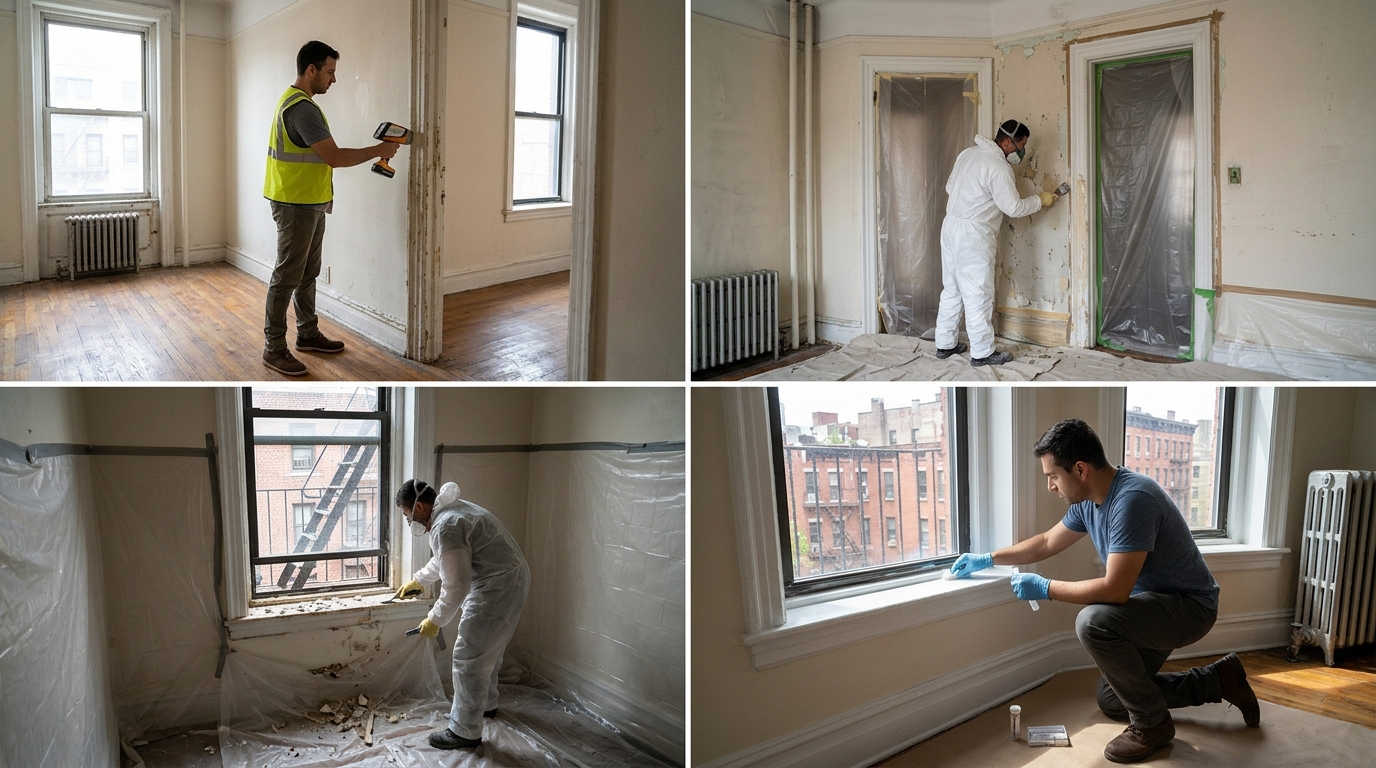
If your building is covered by Local Law 1, the only way to remove the presumption is through an HPD exemption. Under the NYC lead paint exemption rules, testing must be performed by an EPA-certified lead inspector or risk assessor who is independent of the owner and any abatement firm.
The inspector must use an XRF analyzer with an approved Performance Characteristic Sheet at the 0.5 mg/cm² action level. Based on the results, owners can qualify for an exemption in one of three ways.
No Lead-Based Paint Found Through XRF Testing
This is the simplest path to an exemption. If every tested surface in a unit or common area falls below the 0.5 mg/cm² threshold, the owner can apply for a Lead-Free exemption without any abatement work. The inspector provides a report showing negative results for all surfaces, along with the required affidavits.
Complete Abatement or Removal
If testing finds lead-based paint, owners can still qualify for a Lead-Free exemption by permanently removing it. An EPA-certified lead abatement firm must remove the paint or replace the affected components. After the work is complete, an independent firm must collect dust wipe samples to confirm the area is clear of lead dust.
Encapsulation or Containment Where Permitted
Some owners choose to seal lead-based paint rather than remove it. Encapsulation uses approved coatings that bond to the surface, while containment covers the paint with durable materials like sheetrock. This approach qualifies only for a Lead Safe exemption because lead remains in place.
Encapsulation cannot be used on doors, windows, radiators, or surfaces that are chewable or exposed to friction, impact, or heat. Also, if even one area in an application is encapsulated or contained, the entire application can only be approved as Lead Safe.
Lead Free vs Lead Safe Exemptions at a Glance
A Lead-Free exemption means no lead-based paint remains, while a Lead Safe exemption means lead is still present but safely sealed. Both remove the presumption of lead-based paint, but they come with very different long-term duties.
The table below compares the two side by side:
Factor | Lead Free Exemption | Lead Safe Exemption |
Lead remaining | None | Present but sealed |
Qualifying method | Negative test results or full removal | Encapsulation or containment |
Monitoring plan | Not required | Required |
Ongoing inspections | None | Annual visual check and risk assessment every two years |
Safe work practices | Not required for construction | Still required |
Risk of revocation | Lower | Higher if monitoring records are missing |
For most owners, a Lead-Free exemption is the better long-term goal because it removes ongoing obligations completely. A Lead Safe exemption can still make sense when full removal isn’t practical or affordable.
Benefits of an Approved Lead Paint Exemption
An exemption can significantly reduce the time and cost of managing an older building. Once HPD approves it, the exempt unit or common area is treated differently under Local Law 1.
Here's what an approved exemption can remove from your compliance list:
The legal presumption that paint contains lead
Annual lead notices to tenants
Annual visual lead paint investigations
Required turnover work for exempt units
Safe work practice requirements for construction (Lead Free only)
For Lead Safe exemptions, owners still need to follow their monitoring plan and keep detailed records. Even so, most owners find the reduced paperwork well worth the effort.
Unit, Building, or Complex: Which Exemption Should You Apply For?
HPD allows owners to apply for an exemption for a single unit, a single building, or a single apartment complex. Each option has trade-offs that are worth weighing before testing begins.
Individual Unit Exemptions: Each apartment is tested and filed separately. If one unit later loses its exemption, the others are not affected.
Building-wide Exemptions: The inspector can use a HUD-approved sampling method instead of testing every unit, which often lowers upfront costs. However, if any unit later triggers a revocation, the exemption is revoked for every unit in the building.
Complex Exemptions: These cover multiple buildings built at the same time under the same management. They follow similar sampling rules and carry the same building-wide revocation risk.
Exemptions apply only to the specific units and areas that were tested or abated. For most owners, individual unit exemptions offer more protection over time, while building-wide exemptions suit properties with consistent construction and low risk of future violations.
How to Apply for a Lead Paint Exemption in NYC
The application process is straightforward when each step is handled correctly. Missing documents or improper testing are among the most common reasons applications fail.
Follow these steps to apply:
Hire an independent EPA-certified inspector: The inspector or risk assessor must not be the owner, the owner's agent, or the abatement contractor.
Complete XRF testing at 0.5 mg/cm²: All painted surfaces in the unit, building, or common area must be tested using an approved XRF device.
Abate positive surfaces if needed: Use an EPA-certified abatement firm for removal, replacement, encapsulation, or containment.
Get independent dust wipe clearance: After abatement, an independent firm must confirm that no lead dust remains.
Gather the required affidavits: These include testing affidavits from the inspector and, when abatement occurred, affidavits from the abatement firm and dust wipe sampler.
File through the Lead Exemption Online Portal (LEOP): HPD's online portal is the preferred route, although paper applications are still accepted.
Keep all records for at least 10 years: HPD can audit your documents at any time.
Accuracy at every step matters. In fiscal year 2025, HPD received 27,581 exemption applications, granted 17,075, and rejected 5,785, which means roughly one in five applications was turned down.
Not sure whether your units would pass XRF testing at the 0.5 mg/cm² level?
Manhattan Lead provides independent XRF testing and HPD-ready reports for Lead Free and Lead Safe exemptions. Call us at (212) 226-1614 to book your inspection.
Important Rules to Keep in Mind
Getting an exemption is only part of the process. Owners also need to understand the rules that affect how long an exemption lasts and when it can be lost.
Current Testing Standard: Since December 1, 2021, lead-based paint has been defined at 0.5 mg/cm². Older tests done at 1.0 mg/cm² cannot be used for a new exemption without retesting at the lower level.
Online Application Portal: LEOP guides owners through the required documents and notifies them if HPD needs more information.
Exemption Revocation: Under the NYC lead paint exemption rules, HPD can revoke an exemption after a lead-based paint violation based on HPD testing, a denied rebuttal of a presumed violation, or a Commissioner's Order to Abate from the Department of Health. Lead Safe exemptions can also be revoked if monitoring records are missing.
Old 1.0 Exemptions End at Turnover: Exemptions granted under the old 1.0 mg/cm² standard remain valid only until the unit's next turnover. A lease renewal does not count as turnover, but owners must notify HPD when a turnover occurs.
10-Year Recordkeeping: Testing reports, affidavits, and inspector certifications must be kept for at least 10 years and transferred to the new owner if the property is sold.
Accuracy at every step matters. HPD rejects applications with incomplete affidavits, improper testing, or missing clearance results, so working with an experienced, independent inspector can save you months of delays.
What Happens If You Skip Lead Paint Testing?
Testing is the first step toward any exemption, and it is also a legal requirement on its own. Under Local Law 31 of 2020, owners of covered buildings had to complete XRF testing of all units and common areas by August 9, 2025.
Key points to know:
HPD states there are no exceptions to this testing requirement
Vacant units and units under repair must also be tested
New units with a child under six must be tested within one year
Owners must keep proof of attempts when tenants deny access
Failing to comply can lead to a Class C immediately hazardous violation, with civil penalties of $1,500 per unit or common area. If your building has not been tested yet, scheduling an inspection now can prevent costly HPD lead violations and open the door to an exemption.
FAQs
Are buildings built after 1978 exempt from NYC lead paint rules?
Yes, buildings constructed on or after January 1, 1978, fall outside Local Law 1. Under NYC lead paint exemption rules, these buildings carry no presumption of lead-based paint, so annual notices, XRF testing, and turnover work do not apply.
Does an owner-occupied co-op or condo need lead paint testing?
No, testing is not required while a co-op or condo unit is occupied by the owner or the owner's family. However, the building's common areas must still be tested, and the unit becomes subject to testing once it is rented.
How long does an HPD lead paint exemption last?
A Lead-Free exemption granted at the 0.5 mg/cm² standard generally stays in place unless HPD revokes it. Lead Safe exemptions remain valid when required monitoring is documented, and older 1.0 mg/cm² exemptions end at the unit's next turnover.
Can a building with some lead paint still get an exemption?
Yes, if the lead-based paint is properly addressed. Permanently removing it through an EPA-certified abatement firm can qualify for a Lead-Free exemption, while encapsulation or containment can qualify for a Lead Safe exemption with ongoing monitoring.
Can I use old 1.0 mg/cm² test results for a new exemption?
No, new exemptions require XRF testing at the current 0.5 mg/cm² standard. Older 1.0 mg/cm² results completed before December 2021 may still satisfy the Local Law 31 testing requirement, but you must retest at the lower level to apply.
Bottom Line
A building in New York City can be exempt from lead paint rules in two ways. Some properties fall outside Local Law 1 because of their age or occupancy, while covered buildings can earn a Lead Free or Lead Safe exemption through certified XRF testing and, when needed, proper abatement. Following the NYC lead paint exemption rules carefully helps you avoid rejected applications, revoked exemptions, and costly violations. With accurate testing and complete documentation, an exemption can free your property from years of annual notices and inspections.
At Manhattan Lead Inspections, we help NYC property owners move from presumed lead paint to approved exemptions. Our EPA-certified inspectors operate under EPA license LBP-F239341-2 and work independently from any abatement firm, which is exactly what HPD requires. We serve residential and commercial properties across all five boroughs, seven days a week. For portfolio owners, our client portal keeps every property, report, and HPD violation organized in one place.
Every year your building stays under the lead paint presumption means more notices, more inspections, and more paperwork. One certified inspection could be the first step toward ending that cycle. Call us to book your XRF inspection today.