As crazy as it may be, around 60% of New York City’s buildings were built before 1960. What that means is that lead-based paint, being the standard at the time, was used in virtually every one of those buildings.
Lead-based paint was cheap, durable, and washable. Nobody at the time knew that the paint they were using to coat nurseries and kitchen walls was actually filled with neurotoxins that were quietly affecting the cognitive development of children for the next several decades.
Lead-based paint was officially banned by the Federal Government in 1978, but by then, millions of Americans had already been exposed.
Based on this terrifying history, lead inspection in New York has become an important policy response to an ongoing public health problem. It’s important to realize that lead doesn’t come from a single source. In fact, it comes from three sources: paint, dust, and water.
A complete and thorough lead inspection addresses all three. Here’s what you need to know about each of them.
Understanding the Scale of the Problem
The New York City Department of Health and Mental Hygiene leads childhood blood lead surveillance programs that are the most comprehensive across the United States. Their data has consistently shown that while childhood lead poisoning rates have decreased since the 1990s, cases continue to pop up every now and then, and cluster predictably in older housing in lower-income neighborhoods.
According to CDC data, approximately 500,000 children between the ages of 1 and 5 in the United States have blood lead levels above 3.5 micrograms per deciliter. This is currently the CDC reference value that triggers public health action. That in itself is an alarming statistic.
Now that we’ve set the stage for how far along the problem trickles down, let’s explore the three pathways.
1. Lead in Paint
Lead in paint is exactly where the entire story starts, and that’s why it’s the most extensively regulated of the three pathways.
Under EPA and HUD standards, lead-based paint is defined as paint containing 1.0 milligram of lead per square centimeter by XRF analysis, or 0.5% lead by weight through laboratory analysis of a paint chip sample. These are the thresholds set by the federal government that trigger a lead inspection in New York in the first place.
What is XRF Analysis, How Does it Work, and Why Does it Matter?
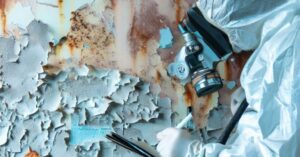
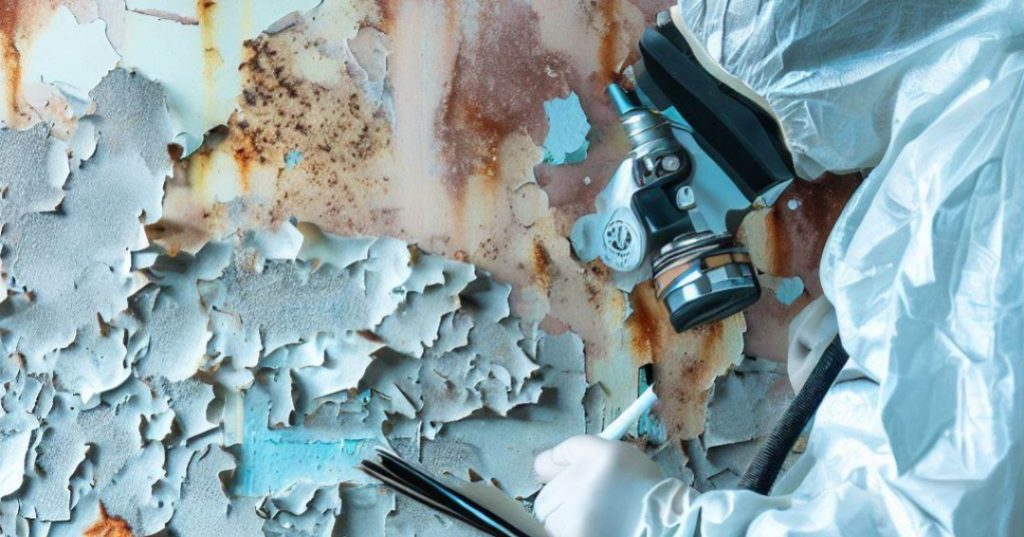
An XRF lead testing has a small, radioactive source that emits X-ray energy at any given surface. This energy excites electrons in the atoms of the material being tested, which, once returned to ground state, emit a secondary X-ray fluorescence at specific wavelengths.
Since lead fluorescence occurs at a certain wavelength, the analyzer measures the intensity and converts it to a mg/cm² reading. This result is instantaneous, non-destructive and can power through multiple layers of paint.
The fact that an XRF analysis can be carried out through multiple layers is what makes this method particularly interesting. This is because a lot of these buildings are extremely old and have multiple layers of paint applied to their surfaces. An XRF finds what’s actually there, instead of a visual inspection that tells you little to nothing.
Inspectors typically use XRF to test every part of the building, including the walls, ceilings, trim, window frames, sashes, sills, doors, door frames, baseboards, radiators, and any other painted surface. The number of readings in every room can easily exceed 100.
Sampling Paint Chips
Paint chips are typically collected and analyzed by atomic absorption spectrometry (AAS). This technique can quantify lead content with high precision. It’s important to note here that paint chip sampling is a destructive and site-specific technique, and only confirms lead content in that specific area and not the entire surface.
What does a Lead Paint Inspection Report Contain?
These reports contain a detailed documentation on every component tested, the measurement method used, and the specific reading obtained. It’s the foundational record for any remediation, clearance testing and compliance documentation that may be required.
2. Lead in Dust
Intact lead-based paint is not as pressing an issue as lead in dust. This is exactly where matters get serious.
Aging lead-based paint tends to chalk, peel, chip, and flake, allowing hazardous lead dust to settle on surfaces throughout your home that you regularly come into contact with. This is where lead dust remediation becomes essential, as it helps safely remove and contain these harmful particles. The risk is particularly dangerous for children, since their normal developmental behavior involves floor play and frequent hand-to-mouth contact, increasing the chances of unintentional ingestion of lead dust.
Wipe Sampling Method
This method requires wiping a defined surface to collect dust. It’s sealed and submitted to an NLLAP-accredited laboratory, and analyzed using ICP-MS or graphite furnace atomic absorption spectrometry. The results you’ll get from this report are in micrograms per square foot (µg/ft²).
The EPA clearance standards that define when a surface is adequately clean following lead disturbance or abatement are:
- Floors: 10 µg/ft²
- Interior windowsills: 100 µg/ft²
- Window troughs: 400 µg/ft²
Also Read: The Health Benefits of Timely Lead Dust Remediation in NYC
3. Lead in Water
While we’re listing this last, this is most definitely the most important, and surprisingly, most overlooked aspect of lead inspection in New York. Lead in drinking water is a serious issue and ranges from the city’s water supply all the way down to your tap.
Where Does the Lead Come From?
The Big Apple’s water supply is sourced from the upstate watershed reservoirs and is treated with orthophosphate to minimize pipe corrosion and lead. So the water leaving these treatment plants has practically no lead.
The problem, however, is in the last stage.
- The lead service lines, or the pipes that connect to a building, may contain lead pipes. Water that’s in contact with this service line can accumulate high concentrations of lead.
- Lead in copper plumbing is the next big source of lead. Before the 1986 ban, lead-tin solder was the standard for joining copper pipes. Over time, water that’s stagnant touches these lead joints, causing lead to accumulate.
- Brass plumbing fixtures before 2014 can contain up to 8% of lead. If faucets, valves and other fittings haven’t been renovated, there’s a high chance they could release lead into water that’s in contact with them.
How Does Water Lead Testing Work?
Water lead testing involves collecting samples and submitting them to a certified laboratory for ICP-MS analysis, which can detect lead at concentrations below 1 ppb.
The standard approach for building-level testing uses first-draw sampling, water collected from a faucet after at least 6 hours of stagnation, typically first thing in the morning before any fixtures have been run. First-draw sampling captures the maximum potential contribution.
Sequential sampling can identify which section of the plumbing is contributing to lead by showing whether lead concentrations decrease or remain high.
The EPA action level of 15 ppb is a regulatory threshold; however, EPA, CDC, and WHO are all explicit that there is no safe level of lead in drinking water.
Get a Lead Inspection Done Today!
Lead inspection in New York is less about simply ticking a box and more about ensuring our children and future generations are safe from lead exposure. We’ve established that there’s no safe amount of lead present in paint, dust, or water, and it’s time to take action today.
Manhattan Lead provides lead inspection across all three pathways: paint, dust, and water. Whether you’re a landlord, a buyer doing due diligence, or a tenant in an older building with concerns about your family’s exposure, our team delivers thorough, professionally documented assessments with clear recommendations.
It’s high time you took matters into your own hands and contacted us to discuss next steps!