What Does “Tenant Not Return Lead Paint Annual Notice” Mean Under NYC Rules?
The annual notice is part of New York City’s system for identifying apartments where a child under six lives or spends a substantial amount of time.
For lead-paint purposes, NYC considers a child to reside in an apartment when the child routinely spends 10 or more hours per week there. The child does not need to sleep in the apartment every night. A child who visits a grandparent, caregiver, or other household member for at least that amount of time can qualify.
The annual notice process generally applies to covered rental housing built before 1960. It can also apply to buildings constructed between 1960 and 1978 when the owner knows lead-based paint is present. Tenant-occupied one- and two-family properties built before 1960 can also fall within the requirements. Rented co-op and condo units may be covered even though owner-occupied units have different treatment.
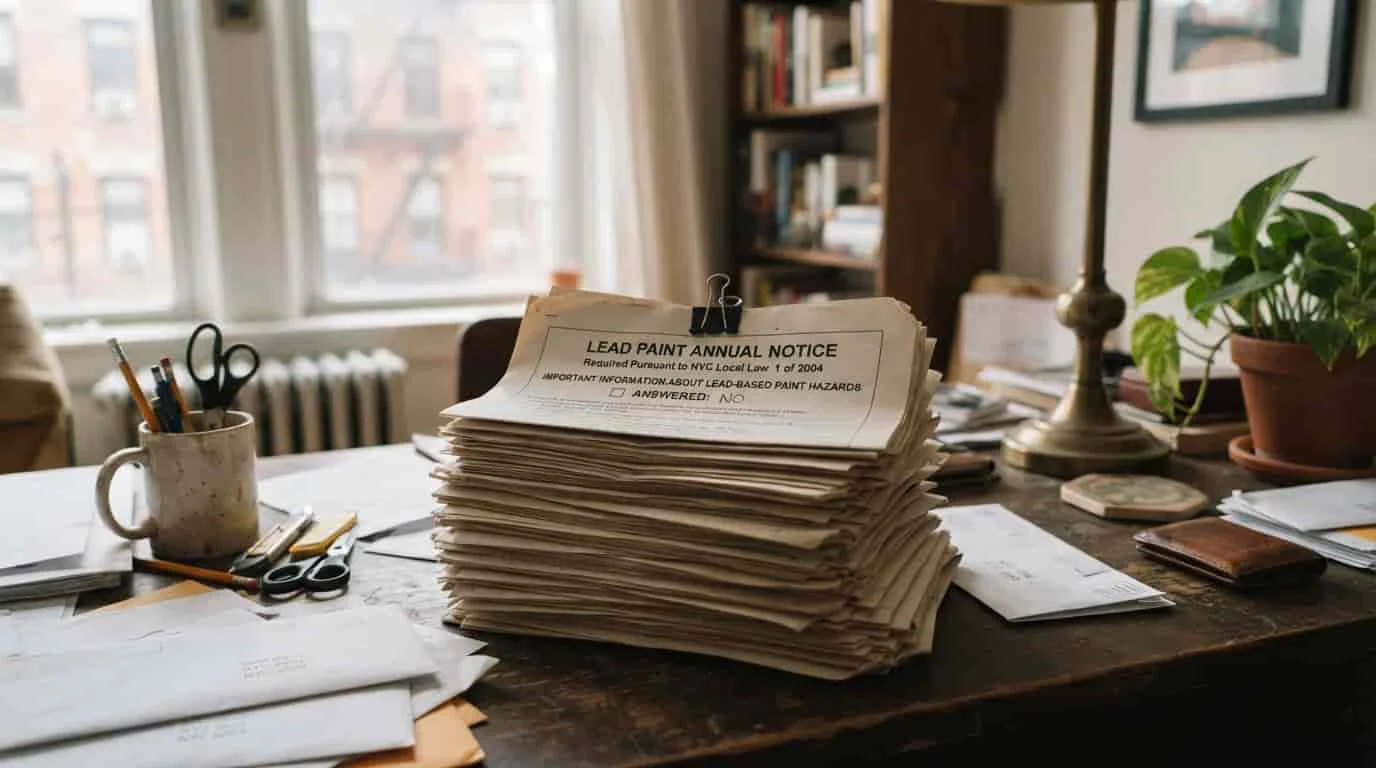
HPD directs covered owners to distribute the annual notice during the January notice period and collect completed forms by February 15. The notice asks whether a child under six resides or routinely spends at least 10 hours per week in the apartment.
Silence from the tenant cannot be treated as a “no.”
What Must a Landlord Do After the February 15 Lead Paint Notice Deadline?
The next steps depend on what the owner already knows.
If the tenant has returned the form, the owner follows the information given on it. If no form comes back but the owner already has actual knowledge that a child under six resides in the unit, the owner should treat the apartment as a child-under-six unit and follow the applicable inspection and lead-safety requirements.
If there is no returned form and the owner does not have actual knowledge about child occupancy, NYC law requires further investigation.
The basic process is:
- Identify every apartment that did not return the notice by February 15.
- Keep proof showing that the annual notice was delivered.
- Between February 16 and March 1, make reasonable attempts to gain access and determine whether a child under six resides in the unit.
- Document each access attempt and the result.
- If access is obtained, determine whether a child of the applicable age resides there and document the finding.
- If reasonable attempts are made but access cannot be obtained, notify DOHMH of the situation in writing and keep a copy of that notification.
These are not optional courtesy calls. The follow-up is part of the annual lead compliance process described by NYC HPD’s annual notice and investigation guidance.
Why Can a Landlord Not Assume There Is No Child After a Tenant Fails to Respond?
The annual notice exists because child occupancy affects several lead-paint duties. Treating a missing answer as proof that no child is present would defeat the purpose of the inquiry.
The law instead places a follow-up responsibility on the owner. If there is no written response by February 15 and no other actual knowledge of whether a child under six resides in the apartment, the owner must make an effort to find out. The New York City Administrative Code calls for inspection at reasonable times and upon reasonable notice to determine whether a child of the applicable age resides there.
This distinction matters for landlords and property managers who handle many units. A spreadsheet showing “no response” is not the end of the record. It should lead to a documented follow-up process.
That is also why informal knowledge can matter. If management already knows that a child under six resides in the apartment, waiting for a returned January form does not erase that knowledge. HPD lists the Annual Notice, lease documents, written tenant notification, and other forms of actual knowledge as ways an owner can identify a child-under-six unit.
What Happens Between February 16 and March 1 After No Annual Notice Response?
The February 16 to March 1 period is the owner’s window for follow-up when the annual notice has not been returned, and child occupancy remains unknown.
The owner must make reasonable attempts to gain access to the apartment. The purpose is to determine whether a child under six resides there, not simply to collect another signature.
“Reasonable” matters. City guidance requires reasonable times and reasonable notice, but the cited HPD guidance does not create one universal number of access attempts that fits every building. Because of that, property owners should be able to show what they did, when they did it, how access was requested, and whether the tenant responded.
A missed appointment without a record can become difficult to explain later. A dated record showing the notice, contact attempts, proposed inspection dates, access result, and follow-up provides a much clearer compliance history.
What Records Should Be Kept When the Tenant Does Not Return the Annual Notice?
Lead compliance is not based only on performing required tasks. Owners also need records showing that those tasks occurred.
If a tenant does not return the lead paint annual notice, the property file should tell the story from the January mailing through the final outcome.
Useful records include:
- Proof that the annual notice was delivered.
- Returned notices from tenants who responded.
- A list of units that did not respond by February 15.
- Dates and methods used to contact each nonresponsive tenant.
- Notices requesting access to the apartment.
- Dates when access was attempted.
- Whether access was granted, denied, or missed.
- The result of the child-occupancy investigation.
- Copies of any written notification sent to DOHMH.
- Annual visual investigation records if a child under six is identified.
- Records of lead hazard correction and safe work practices where work becomes necessary.
HPD states that property owners must maintain records connected with lead-based paint compliance for at least 10 years. HPD may request records during an audit, after certain lead violations, or when examining whether an owner met Local Law 1 obligations.
A tenant not returning one piece of paper can therefore become a much larger issue when the owner also has no proof of follow-up.
What If the Tenant Refuses Access for the Lead Paint Follow-Up?
A tenant can fail to respond to the form and then fail to provide access. Those are two separate events, and both should be documented.
If the owner makes reasonable attempts between February 16 and March 1 but cannot gain access, NYC rules require the owner to notify DOHMH of that circumstance in writing. The owner should also retain a copy of the notification.
NYC Health gives the same direction. If the tenant does not return the form or refuses access and the owner cannot enter the apartment to inspect and complete required work by March 1, the Health Department must be informed.
A refusal of access should not be treated as permission to mark the unit as having no child under six.
The stronger compliance record is one that shows the annual notice was delivered, the tenant did not respond, access was requested within the required follow-up period, reasonable attempts were made, and the Health Department was informed when access could not be obtained.
For disputes over access rights, lease terms, or legal remedies against an occupant, owners should obtain advice from qualified landlord-tenant counsel. The lead compliance requirement and a landlord-tenant access dispute are related, but they are not the same issue.
What Happens If the Follow-Up Finds a Child Under Six?
Finding a child under six changes the owner’s lead-based paint responsibilities.
Once the owner knows that a child under six resides or routinely spends 10 or more hours each week in the apartment, an annual visual investigation is required. The investigation looks for conditions that can create lead-based paint hazards, including peeling or chipping paint, deteriorated subsurfaces, chewable surfaces, friction surfaces such as doors and windows, and impact surfaces.
The investigation must cover painted surfaces throughout the apartment, including painted areas in closets and cabinets. HPD says a hired inspector is not required just to conduct the annual visual investigation, although it recommends HUD visual-assessment training for the person performing it. The tenant must receive a copy of the investigation results.
If a child under six resides in the building, common areas also become part of the annual visual investigation requirement.
The annual visual check should not be confused with an XRF lead testing in NYC requirement. XRF testing determines whether painted surfaces contain lead-based paint, while the annual visual investigation looks for deteriorated paint and other conditions that can create hazards.
HPD states that the deadline for the required one-time XRF testing of painted surfaces in covered pre-1960 apartments and common areas has already passed. Owners who have not completed the required testing should address that compliance gap rather than treating the annual notice as a substitute for testing.
Does Finding a Child Under Six Create New Lead Abatement Duties?
Current NYC rules make identifying child-under-six units important beyond the annual visual inspection.
HPD states that owners must complete additional lead-based paint work in applicable child-under-six units. For a unit where a child under six resided as of January 1, 2025, required work must be completed by July 1, 2027. If a child under six begins residing in the unit after January 1, 2025, HPD says the work must be completed within three years after the child begins residing there.
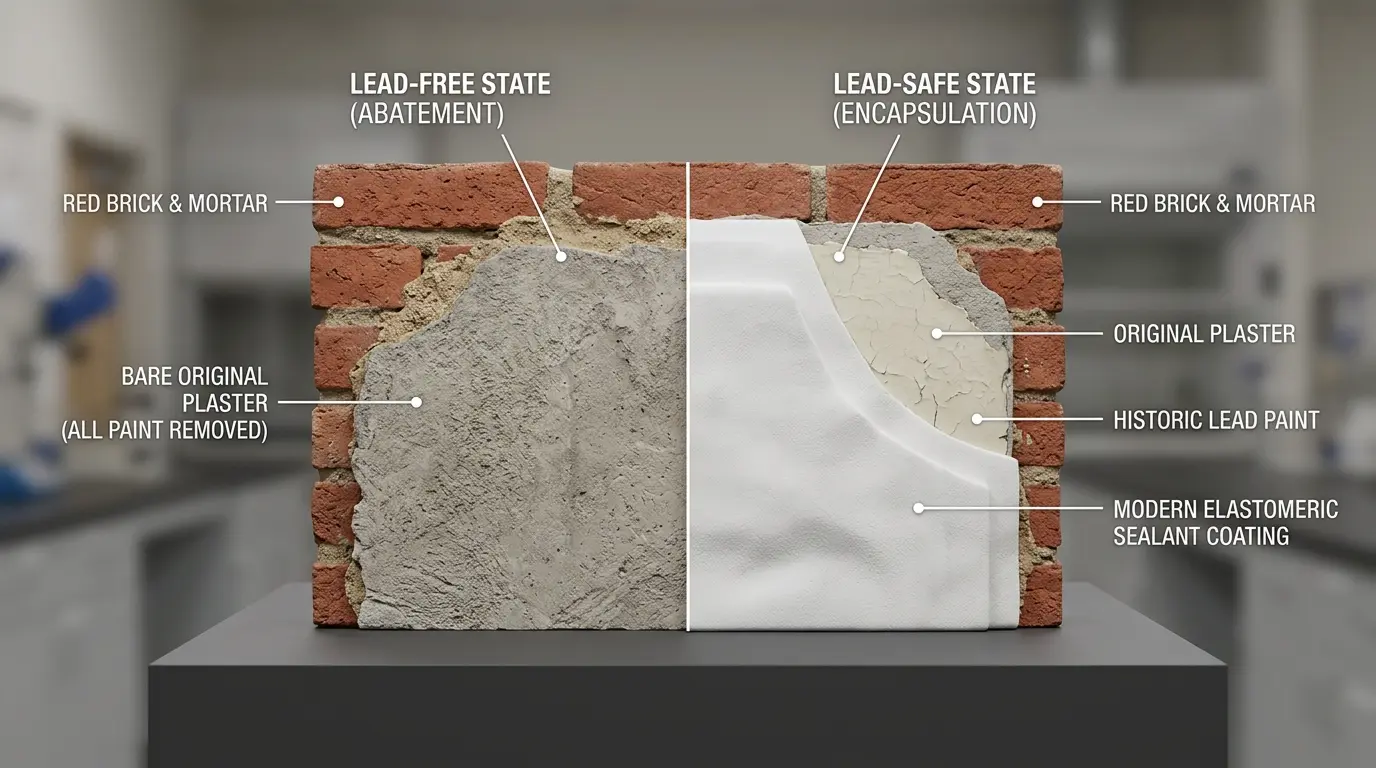
These requirements can include abatement of lead-based paint on door and window friction surfaces and other stabilization or correction work required under the applicable rules.
This creates another reason why accurate annual notices matter. The response may establish when an owner learned that a child under six was residing in the apartment, and that date can affect later compliance deadlines.
If deteriorated paint is found in a child-under-six unit, the issue can require action much sooner. Lead hazard repairs must follow the safe work practices and contractor requirements that apply to the condition and scope of work.
Does a Missing Lead Paint Annual Notice Automatically Create an HPD Violation?
A missing tenant response and an owner’s failure to comply are not the same thing.
The tenant is required to complete and return the annual notice. But when the tenant does not return it, NYC law gives the owner a follow-up process. The compliance problem for the owner grows when the owner fails to perform that process, cannot produce the records, ignores known child occupancy, fails to conduct required investigations, or leaves lead-based paint hazards uncorrected.
HPD can review annual notices and investigation records during lead-related audits. It can also request records when certain violations are issued.
That is why a landlord should not focus only on whether the tenant signed the form. The question an audit may raise is whether the owner fulfilled the responsibilities that followed the missing response.
Why HPD Lead Paint Recordkeeping Matters More in 2026
Recordkeeping is not a paperwork issue that can be fixed by recreating a file years later.
HPD announced in March 2026 that litigation resulting from lead-based paint recordkeeping audits had produced more than $150,000 in civil penalties and correction orders from enforcement activity in September 2025. HPD also reported that it initiated 22 cases during calendar year 2025 to enforce lead-based paint requirements.
The agency said its audits examine items such as annual notices, inspection reports, turnover records, and documentation showing that required lead-safe work practices were followed.
The HPD 2026 lead recordkeeping enforcement update shows why owners should treat annual notice records as compliance documents rather than routine tenant correspondence.
A tenant not returning the lead paint annual notice situation can be manageable when each required step has a dated record. It becomes harder to defend when the only record is an unanswered January form.
Can a Landlord Skip the Annual Notice If the Apartment Tested Negative for Lead?
Testing negative does not by itself mean an owner should stop sending annual notices.
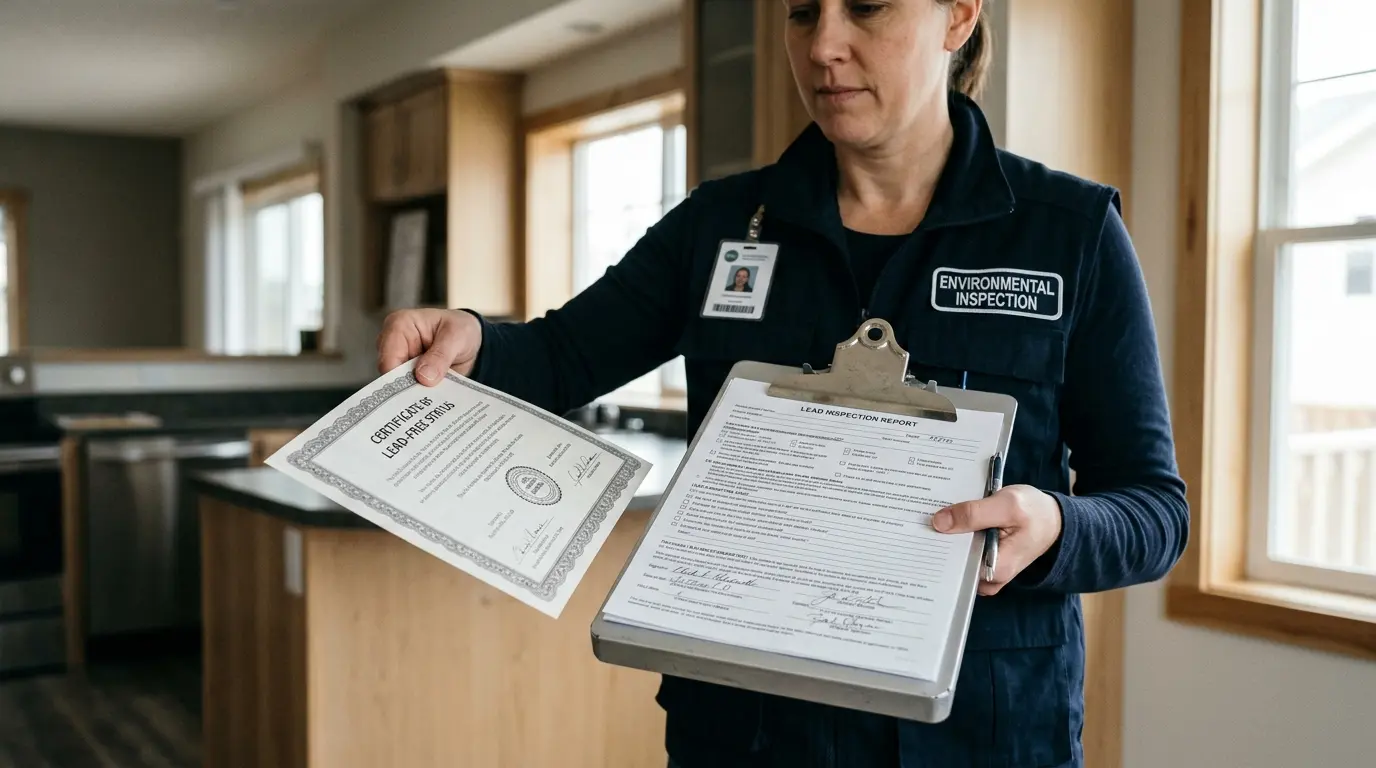
HPD explains that when testing establishes that a unit or common area is free of lead-based paint, an owner can apply for a lead-free exemption. Once HPD grants an applicable exemption, certain ongoing Local Law 1 duties, including annual lead notices and annual investigations for the exempted unit, no longer apply.
The important word is granted. A testing report and an HPD exemption are not automatically the same thing.
Owners should therefore check the exemption status of each property or unit before removing it from the annual notice process.
How Can NYC Owners Prevent Annual Notice Nonresponse From Becoming an Audit Problem?
The best annual notice system starts before February 15.
Property managers should know which properties are covered, use the current approved notice, document delivery, provide tenants with clear return instructions, and track responses as they arrive. Nonresponsive units should be identified before the follow-up window begins.
Once February 15 passes, the focus should move from collecting forms to completing the required investigation process.
A property with many apartments can become difficult to track when annual notices, access attempts, visual investigations, XRF reports, repair records, and tenant changes are stored in different places. A unit-level compliance file gives management one record showing what happened each year.
Owners should also compare annual notice information with lease and renewal records. If a tenant reported a child through another communication, management should not ignore that information because the annual form is missing.
This is especially important where a lead paint inspection in NYC has already identified lead-based paint or where a building has past HPD lead violations. A missed annual-notice follow-up can create another recordkeeping weakness in a property that may already receive closer attention.
Get the Lead Conditions Checked After an Annual Notice Problem
A missing tenant response can feel like a problem the property owner cannot control, but the law focuses on what happens next. The owner can control whether delivery records are kept, whether follow-up starts after February 15, whether access attempts are documented, whether DOHMH is notified when required, and whether a child-under-six unit receives the lead inspections and corrective work the law calls for.
If a tenant does not return the annual lead paint notice, the issue has raised questions about the lead status of an apartment, Manhattan Lead Inspections provides EPA-certified lead paint testing, XRF inspections, lead paint inspections, dust wipe clearance testing, and support for NYC lead violation matters. We help property owners and managers document the condition of painted surfaces and identify testing needs across New York City. Contact Manhattan Lead Inspections to schedule an inspection before an unanswered notice, missing test record, or deteriorated painted surface turns into a larger compliance problem.