Most commercial property owners in New York City think about rent rolls, tenant complaints, building maintenance, and keeping costs under control. Lead paint is not a priority until a renovation hits a wall, a city inspector knocks on the door, or a tenant raises a health concern. And by that point, the situation has already become expensive.
According to NYC Housing data, more than 60 percent of the city’s buildings were constructed before 1960. The federal government banned lead-based paint for residential use in 1978; however, buildings constructed before that year still contain layers of it. That includes office buildings, retail spaces, restaurants, warehouses, and mixed-use properties across all five boroughs.
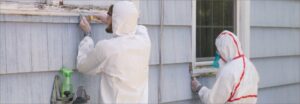
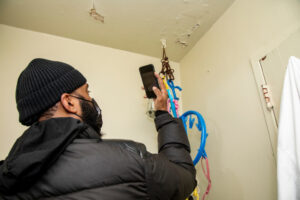
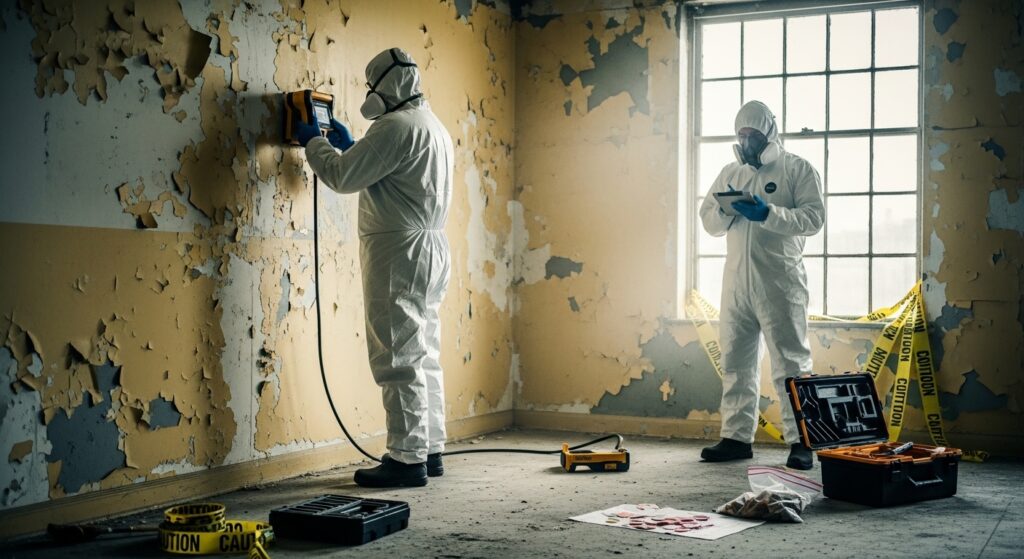
We perform lead paint inspection in NYC for commercial and residential properties on a daily basis. We observe the results of owners testing early, and we witness what happens when they skip it. This blog walks you through when inspections are required, what triggers them, and why this is one step you cannot afford to ignore as a commercial property owner.
What Triggers a Lead Paint Inspection for Commercial Properties
If any of the following situations apply to your property, testing is a requirement under federal and city regulations.
The most common trigger is renovation or construction work. Under the EPA’s Renovation, Repair, and Painting Rule, any project that disturbs painted surfaces in a pre-1978 building must include lead paint testing before work begins. This applies to tenant buildouts, common area upgrades, structural repairs, and any demolition that involves painted materials. If the work will disturb more than six square feet of paint on interior surfaces or more than 20 square feet on exterior surfaces, lead-safe work practices must be followed. And you cannot follow lead-safe practices without first knowing where the lead is.
If your commercial building also contains residential units, which is the case for mixed-use properties across Manhattan, Brooklyn, and the Bronx, NYC Local Law 1 of 2004 and its 2024 updates apply. These laws require property owners to address lead paint hazards in buildings with three or more residential units where children under six years old live. The rules cover the entire building, including shared spaces between the commercial and residential sections.
A third trigger is a real estate transaction or refinancing. Lenders and buyers of commercial properties built before 1978 will often request a lead paint risk assessment as part of their due diligence. If you cannot produce documentation showing the lead status of your building, the deal can slow down or fall apart.
A lead paint inspection in NYC gives you the documentation you need to move forward with confidence, whether the project is a renovation, a sale, or a compliance check.
NYC Lead Paint Laws That Apply to Commercial Building Owners
New York City’s lead paint regulations are among the strictest in the nation. If you own commercial property, you need to understand how these laws affect your building.
Local Law 1 of 2004, also known as the Childhood Lead Poisoning Prevention Act, placed requirements on owners of residential and mixed-use buildings. The law assumes that apartments in pre-1978 buildings where children under six reside contain lead paint unless an inspection proves otherwise. For mixed-use properties, this assumption extends to common areas like lobbies, hallways, and stairwells.
The 2024 amendments to this law expanded the inspection and remediation requirements further. Building owners must now conduct annual visual assessments of painted surfaces in covered units and common areas. If paint is peeling, chipping, or deteriorating, it must be tested and corrected.
On the federal side, the EPA’s RRP Rule requires that any renovation work in pre-1978 buildings be performed by certified firms using lead-safe work practices. This applies to commercial spaces that are classified as child-occupied facilities, such as daycare centers, schools, and pediatric clinics.
OSHA also has rules that apply to commercial construction and maintenance projects. If workers will be disturbing lead paint during their work, the employer must conduct an exposure assessment and follow OSHA’s Lead in Construction Standard, which covers air monitoring, protective equipment, and medical surveillance.
These are laws with financial penalties attached. A lead paint inspection in NYC is the first step in meeting every one of these obligations.
What Happens If You Do Not Comply With Lead Paint Laws
The penalties for non-compliance with NYC lead paint laws are not minor. The city’s Department of Health and Mental Hygiene can issue violations with fines starting at $500 and going up to $1,000 per condition, per inspection cycle. For buildings that fail to correct violations, the fines accumulate with each follow-up visit.
At the federal level, the EPA can impose penalties of up to $37,500 per day per violation under the RRP Rule. If a renovation project disturbs lead paint without proper testing, containment, and cleanup, every day of that violation counts separately.
Beyond the fines, there are enforcement actions. The city can order a full lead abatement at the owner’s expense. The Department of Buildings can issue stop-work orders on renovation projects that are not in compliance.
None of these consequences is theoretical. And they happen most often to property owners who assumed lead paint was not a problem in their building because they never tested for it.
Lead Paint Risks in Older Commercial Buildings
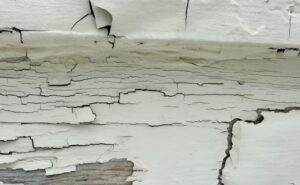
Lead paint that is in good condition and covered by newer paint layers does not present an immediate risk. The problem starts when the paint deteriorates or gets disturbed. Peeling paint, cracking surfaces, and friction areas like doors and windows that rub when opened all release lead dust and chips into the environment.
According to the CDC, there is no safe level of lead exposure. In adults, lead exposure can cause high blood pressure, kidney damage, nerve disorders, and reproductive issues. In children, the effects are more severe and can include brain damage, behavioral problems, and developmental delays.
For commercial property owners, the risk extends beyond health. If an employee or tenant is exposed to lead in your building and suffers health effects, you face liability. Lead poisoning claims in New York have resulted in settlements that reach into the hundreds of thousands and sometimes millions of dollars. The property owner is held responsible for conditions in the building, and the absence of a lead inspection makes the legal position much worse.
A documented lead paint inspection in NYC is your first line of defense against both health hazards and legal liability. It shows that you took the required steps to identify and address the risk.
Who Needs to Schedule a Lead Paint Inspection
If you fall into any of the following categories, you should schedule an inspection without delay:
- You own a commercial or mixed-use building in NYC that was built before 1978 and has no lead paint inspection on record.
- You are planning a renovation, buildout, or construction project that will involve any disturbance to painted surfaces.
- You have peeling, cracking, or deteriorating paint in common areas, tenant spaces, or exterior surfaces.
- You are preparing to sell, refinance, or transfer ownership of a pre-1978 commercial property.
- Your building contains a child-occupied facility such as a daycare, preschool, or medical office serving children.
If even one of these applies to you, you need a lead paint inspection in NYC for the next quarter. The risk compounds with every week that passes without documentation.
A Violation Letter Is Not How You Want to Find Out
We get calls every month from property owners who just received a violation notice or a stop-work order because they did not have a lead paint inspection on file. By the time they call us, the fine has already been issued, the project has already been delayed, and the cost has already multiplied beyond what testing alone would have been.
Contact Manhattan Lead today to schedule your lead paint inspection in NYC. We test your building, we document the results, and we give you the report you need to stay compliant, protect your tenants, and keep your projects moving forward. The inspection takes hours. The cost of skipping it can follow you for years. Call us now before the city calls you first.