Before demolishing your house or building, there’s a question that could save you from massive fines, legal headaches, worker injuries, and environmental disasters: Have you tested for lead?
If your building was constructed before 1978, there’s a good chance you could find lead-based paint beneath the surface. Without proper lead paint inspection in NYC, you could be creating a toxic cloud that endangers everyone on-site and everyone nearby.
Here’s why lead inspection must come before demolition.
Lead Usually Hides in Plain Sight
If your building was constructed before 1960, it’s presumed to contain lead-based paint unless proven otherwise. That’s just how it is.
Lead was widely used in paint before 1960 because it made paint stronger, more durable, and longer-lasting. It creates beautiful, tough finishes. New York City banned the sale of lead-based paint in 1960. This was decades before the federal government banned it in 1978, but that doesn’t mean it disappeared.
Hundreds of thousands of buildings in NYC still contain lead paint. When lead-based paint is intact and undisturbed, it’s relatively stable. The danger comes when you disturb it through demolition. That’s when lead becomes an active health hazard.
What Happens When You Demolish Without Testing?
1. Immediate worker exposure
OSHA has determined that workers performing manual demolition on lead-painted structures may be exposed to airborne lead levels that exceed the Permissible Exposure Limit (PEL).
Your workers are breathing in lead dust with every breath. Workers potentially at risk include those involved in ironwork, demolition work, painting, lead-based paint abatement, plumbing, HVAC maintenance, electrical work, and carpentry. Plumbers, welders, and painters are among those most exposed.
2. Contaminated work area
Lead dust spreads throughout the building. It settles on floors, windowsills, HVAC systems, and any surface it touches. If residents are living in adjacent apartments, they’re now being exposed.
3. Environmental violation
You’ve just created a lead hazard that must be abated according to strict EPA and NYC Department of Health regulations. The cleanup costs will far exceed anything you would have spent on proper testing and containment.
4. Legal liability
You’re now liable for worker exposure, resident exposure, and environmental contamination. Fines start at $1,500 per violation and increase rapidly.
5. Project shutdown
Once authorities identify the contamination, your project will stop. No work will continue until proper abatement, clearance testing, and regulatory approval are completed. Your timeline is destroyed.
6. Health consequences
Lead poisoning can cause severe health issues. Particularly in young children, leading to developmental delays, learning difficulties, behavioral problems, and other long-term health problems that cannot be cured. For adults, lead exposure causes neurological damage, kidney problems, reproductive issues, and cardiovascular problems.
All of this could have been prevented with lead inspection and lead paint testing in NYC before demolition began.
Laws Regarding Lead Paint
Local Law 1 of 2004 (Childhood Lead Poisoning Prevention Act)
This foundational law requires property owners of buildings built before 1960 to identify and remediate lead-based paint hazards.
This means:
- Annual inspections in apartments where children under six reside
- Lead-safe work practices for any work disturbing 2 square feet or more of paint
- EPA-certified firms for all work disturbing lead paint
- Dust wipe testing after work completion
- Records are to be maintained for 10 years
Local Law 31 of 2020 (XRF Testing Mandate)
This law expanded inspection requirements by mandating X-Ray Fluorescence XRF lead testing.
Here are the main guidelines regarding this law:
- Buildings with children under six require inspection within one year of move-in
- Testing must be performed by EPA-certified inspectors using XRF analyzers
Before you can legally demolish, you need to know exactly where lead is located so you can follow proper abatement procedures.
Local Law 66 of 2021 (Lower Lead Threshold)
This law lowered the threshold defining lead-based paint from 1.0 mg/cm² to 0.5 mg/cm². This stricter standard means more surfaces qualify as lead-based paint, requiring special handling.
Local Law 111 of 2023 (Common Areas)
This law extended XRF testing requirements to all common areas in residential buildings, hallways, stairwells, lobbies, basements, and any shared spaces.
You can’t just test individual units. If your project involves common areas, they must be tested as well.
EPA Renovation, Repair, and Painting (RRP) Rule
Federal regulations require that any renovation, repair, or painting project in pre-1978 housing or child-occupied facilities must be performed by EPA-certified renovators. Practices must be lead-safe too.
This includes demolition activities. Any work that disturbs lead-based paint falls under these requirements.
Also Read: Checklist for NYC Local Law 31 Compliance
What Should You Expect During a Lead Inspection?
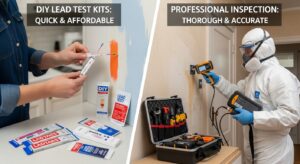
Professional lead inspection in NYC is designed to give you a complete picture of where lead exists in your building.
Step 1: Hire an EPA-Certified Inspector
Only EPA-certified lead inspectors or risk assessors can perform compliant testing in NYC. The city requires proper certification. Improper testing can lead to inaccurate results that put everyone at risk.
Step 2: XRF Testing
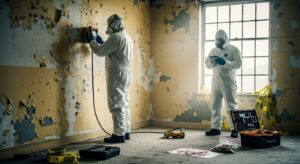
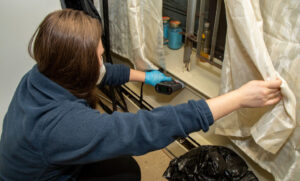
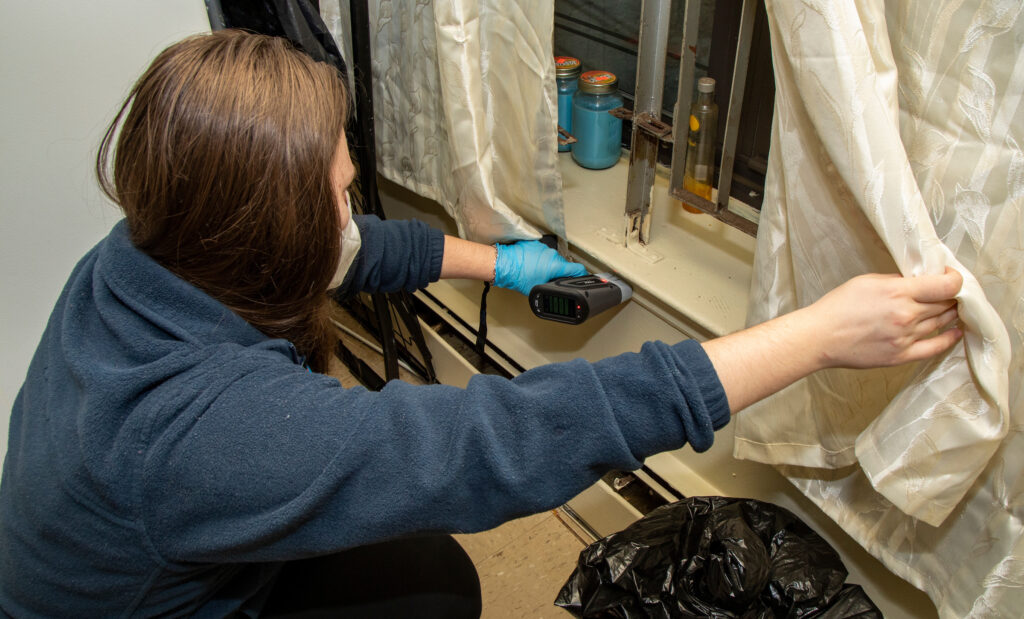
The inspector uses an XRF analyzer to test painted surfaces. This device uses X-ray technology to detect lead without damaging the surface.
It checks the following areas for lead:
- All painted surfaces in the demolition area
- Walls, ceilings, floors
- Doors and door frames
- Window frames and sills
- Trim, baseboards, and molding
- Railings and banisters
- Any painted components or fixtures
The XRF provides immediate, accurate readings showing exactly how much lead is present in each surface.
Step 3: Report
The inspector provides a detailed written report documenting:
- Every surface tested
- XRF readings for each location
- Determination of which surfaces contain lead-based paint
- Recommendations for handling lead surfaces during demolition
- Maps or photos showing lead locations
This report tells your demolition crew exactly what they’re dealing with and how to proceed safely and legally.
Step 4: Record Keeping
NYC requires that you maintain inspection reports for at least 10 years and make them available to HPD upon request.
What Testing for Lead Tells You
A lead inspection tells you several critical things:
Where lead is located
Most surfaces may not test positive, while others do. Knowing exactly which surfaces contain lead allows you to plan your demolition strategy.
How much lead is present
XRF testing provides quantitative results. Higher concentrations require more strict handling procedures.
Which work practices are required
Based on the amount and location of lead, you’ll know whether you need:
- Standard RRP certification and practices
- Full lead abatement certification and procedures
- Notification to the NYC Department of Health if there’s more than 100 square feet of lead paint
Worker protection requirements
OSHA requires specific protective measures based on lead exposure levels. Your inspection results determine what respiratory protection, protective clothing, hygiene facilities, and medical monitoring your workers need.
Whether exemptions are possible
If testing shows no lead is present, or if you choose to permanently remove lead-based paint before demolition, you can file for exemptions. These exemptions reduce future obligations.
What Does XRF Testing Catch?
Lead is dangerous during demolition because you can’t see it, you can’t smell it, and it’s almost never where you think it is.
Layered Paint
Most pre-1960 buildings have been painted multiple times over the decades.
When you start demolition without testing, you release decades of accumulated lead dust. XRF testing sees through all the layers. It detects lead underneath, giving you the complete picture before you disturb anything.
Unexpected Places
Most people are often shocked by XRF results. The walls test negative, so they assume they’re safe, but that’s not always the case. You could end up finding lead in the least expected of places, such as:
- Window frames and sills
- Door frames and trim
- Radiators and pipes
- Behind built-ins
- Ceilings
Dust Migration
Lead dust is incredibly fine. These particles are measured in microns. During demolition, this dust doesn’t just stay in the work area. It travels through:
- HVAC systems
- Gaps around doors
- Worker clothing
- Hallways and stairwells
Testing Saves You From Unexpected Situations
Discovery during work
The worst time to discover you have a lead is after you’ve already disturbed it. You now have contamination and a violation. XRF testing provides advanced notice so you can plan effectively.
Underestimating scope
Maybe you knew the windows had lead, but you didn’t test the trim, doors, or ceilings. Now your small lead job has become a whole-building abatement situation mid-project.
The exemption opportunity
If testing shows certain areas are lead-free, you can document that and avoid unnecessary precautions in those specific areas. Without testing, you must assume everything contains lead and treat it all as hazardous, even areas that might be safe.
How to Carry Out a Safe Demolition?
Once you have inspection results showing lead is present, here’s how demolition must proceed:
1. Hire EPA-Certified Firms
EPA-certified inspectors and firms must perform all work that disturbs lead-based paint. For demolition involving more than 100 square feet of lead paint or window removal, you need firms certified for lead abatement.
2. File Required Notifications
For work disturbing more than 100 square feet of lead paint or removing two or more painted windows, you must file a Notice of Commencement with the NYC Department of Health at least 10 days before work starts.
3. Implement Containment Measures
The work area must be isolated from occupied spaces:
- Seal off the demolition area
- Close and seal all HVAC vents
- Post warning signs
- Establish separate entrances for workers
- Create clean changing areas
4. Use Lead-Safe Work Practices
These practices are prohibited:
- Open-flame burning or torching
- Machine sanding or grinding without HEPA exhaust
- Abrasive blasting without containment
- Heat guns above 1100°F
- Dry scraping more than one square foot in any room
These practices are allowed:
- Wet methods to minimize dust
- HEPA vacuum equipment
- Daily cleanup of work area
- Proper waste containment and disposal
5. Worker Protection
- Respiratory protection
- Protective clothing that stays on-site
- Hygiene facilities for washing before leaving the work area
- Medical monitoring and blood lead testing for high-exposure workers
- Training on lead hazards and safe work practices
6. Proper Waste Disposal
Lead-contaminated demolition debris can’t go in regular construction dumpsters. Large debris must be wrapped in polyethene, sealed with tape, and disposed of as hazardous waste.
7. Clearance Testing
After demolition is complete, before the space can be reoccupied, an independent EPA-certified inspector must collect dust wipe samples from floors, window wells, and window sills. Lab analysis must show lead-contaminated dust is below regulatory thresholds.
Only after clearance testing passes can the space be used again.
Test First, Demolish Second!
Lead inspection in NYC before demolition isn’t an optional step you can skip to save time or money.
When you test first, you know exactly what you’re dealing with. You can plan properly, budget accurately, hire the right contractors, implement correct procedures, protect your workers and residents, comply with all regulations, and avoid liability.
At Manhattan Lead, we specialize in lead inspection that gives you the complete picture before any demolition work begins. Our inspectors use XRF technology to accurately detect lead-based paint on every surface.
We also provide detailed reports that tell you exactly where lead is located, how much is present, and what procedures you need to follow.
Contact us today to schedule your pre-demolition lead inspection.