
Lead Water Testing NYC
Ensure the safety of your home’s water with our expert lead water testing services in NYC. Our certified professionals use advanced equipment to provide accurate testing for harmful lead contamination. With fast and reliable results, we help you protect your family’s health and maintain clean, safe water in your home. Trust us to deliver peace of mind and expert guidance every step of the way.
Quick and accurate XRF lead testing
Certified Lead Testing for Your Building's Drinking Water
New York City’s drinking water leaves the upstate reservoirs virtually lead-free. Lead enters through the service line connecting a building to the city main, and through the plumbing inside the building itself which is why testing has to happen at your tap, not at the treatment plant.
We collect samples on site, submit them to an accredited laboratory, and return documented results you can use for compliance, a property sale, or a violation response.

Lead Water Testing in NYC
Where Lead in NYC Drinking Water Actually Comes From
New York City’s drinking water arrives from 19 upstate reservoirs through lead-free aqueducts and water mains. The water itself is delivered virtually lead-free. The problem is what happens in the last few feet.
Lead enters drinking water in two places: the service line that connects a building to the city water main, and the plumbing, solder, and fixtures inside the building. According to Department of Environmental Protection records, more than 119,000 of the city’s privately owned service lines are made of lead, and another 110,000 are of unknown material. DEP is responsible for overseeing the replacement of all lead service lines by 2037.
Lead water service lines were banned in New York City in 1961. If your building predates that, its service line may well be lead.
Lead exposure is associated with impaired cognitive development in children, including reduced IQ and behavioral effects. In adults it is associated with cardiovascular and kidney effects. Children under six and pregnant women are most at risk, because lead crosses the placenta and affects developing nervous systems.
Lead in water has no colour, taste, or odour. The only way to know is to test.
What the Legal Limits Actually Are
Under the EPA’s Lead and Copper Rule, the federal action level for lead in drinking water is currently 15 parts per billion (ppb). That threshold is dropping to 10 ppb under the Lead and Copper Rule Improvements, finalized in October 2024, with a compliance date of November 1, 2027.
Two things worth understanding about that number:
It is not a safety threshold. The EPA’s maximum contaminant level goal for lead is zero. The action level is a trigger that requires a water system to take corrective steps — it is not a level below which water is considered safe.
It applies to water systems, not to you. The Safe Drinking Water Act regulates public water suppliers like NYC DEP. It does not impose testing obligations on individual residents or building owners. Your obligations, if you have any, come from other sources — child care licensing requirements, school testing rules, HPD violations, or a purchase contract.
If your result comes back elevated, we’ll explain what the number means and what your options are.
Test for lead, breathe easy
How Manhattan Lead’s Water Testers Inspect Your Water Supply
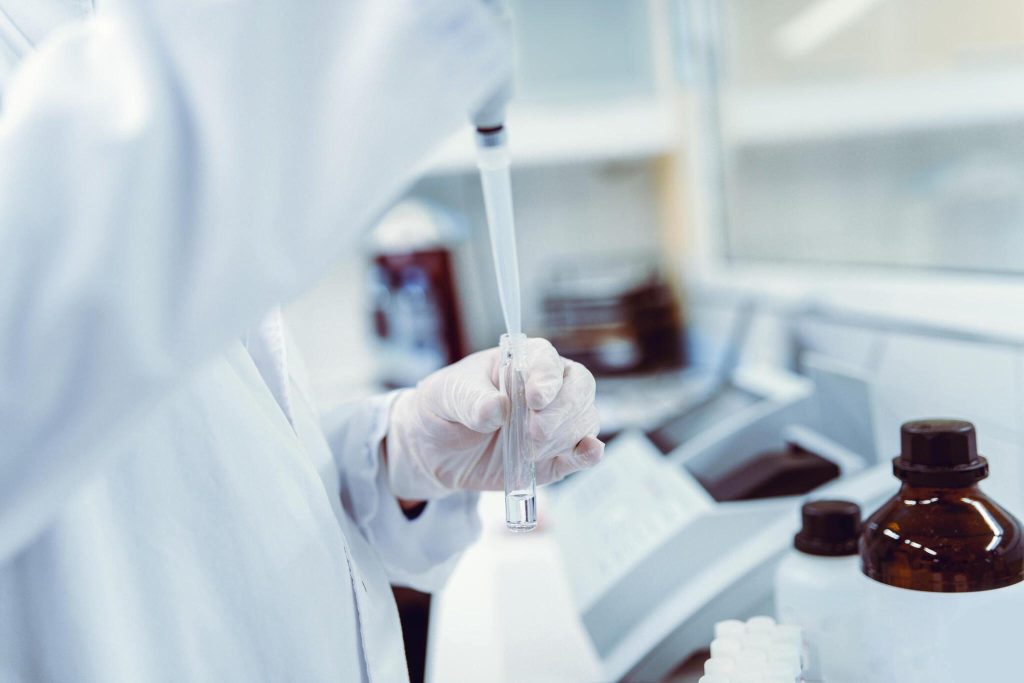
Our technician comes to your property and collects water samples following EPA sampling protocol — typically a first-draw sample after the water has sat unused for at least six hours, which is when lead concentrations are highest. Depending on what you need to establish, we may also collect sequential samples to identify whether lead is coming from the service line, a riser, or a specific fixture.
Samples are sealed, documented under chain of custody, and submitted to an accredited laboratory.
Inductively Coupled Plasma Mass Spectrometry (ICP/MS):
The standard EPA-approved method for lead in drinking water. The sample is ionized in an argon plasma and the resulting ions are measured by mass spectrometer. It detects lead at very low concentrations — well below the regulatory action level — and returns a precise numeric result in parts per billion.
This is the method used for the results we provide.
Anodic Stripping Voltammetry
An electrochemical technique in which dissolved metal ions are deposited onto an electrode and then measured as they are stripped back off. It is used in some field and screening applications, but ICP-MS is the standard for results intended to satisfy regulatory or transactional requirements.
XRF Testing
What About XRF?
XRF analysis is the method New York City requires for lead-based paint, and it’s the core of our inspection work — but it measures lead in solid surfaces, not in water. Water samples require laboratory analysis.
If you’re dealing with lead in paint rather than water, see our XRF lead testing page.
Quick and accurate XRF lead testing
Who Needs Certified Water Testing
- Child care facilities and daycares. Licensed child care facilities in New York must comply with state drinking water lead testing requirements. Testing must be performed by an approved laboratory following New York State Office of Children and Family Services (OCFS) and Department of Health (DOH) requirements. The free NYC DEP residential lead test kit does not satisfy these regulatory obligations.
- Schools. New York State requires all public schools, charter schools, and BOCES to test every potable drinking and cooking water outlet for lead at least once every three years using a New York State ELAP-certified laboratory. Any outlet exceeding the state’s action level must be removed from service until corrective action and follow-up testing are completed.
- Landlords and property managers. If a tenant has raised concerns about water quality, a child in the building has an elevated blood lead level, or you need documented due diligence across a property portfolio, professional laboratory testing with a documented chain of custody provides reliable, defensible results.
- Home buyers and sellers. Water testing can be an important part of due diligence when purchasing or selling an older property, particularly if the building was constructed before lead plumbing materials were phased out or if documentation is requested during the transaction.
- Properties with known or unknown service line materials. If your property has a lead service line—or if the service line material is unknown—testing can determine whether lead is entering your drinking water and whether additional investigation or remediation is needed.
- Anyone with a previous elevated lead result. If earlier testing detected elevated lead levels, the next step is identifying where the lead is entering the plumbing system. This typically requires a professionally designed sampling plan with multiple samples, rather than repeating a single tap water test.

Quick and accurate XRF lead testing
If Your Water Tests Positive for Lead
Immediate steps you can take:
Use only cold water for drinking, cooking, and preparing infant formula. Hot water dissolves lead more readily.
Flush the tap before using it. Run cold water for at least 30 seconds, and once it runs cold, another 15 seconds. Water that has sat in pipes overnight carries the highest concentration.
Use a filter certified to remove lead a pitcher filter or under-sink system certified to NSF/ANSI 53.
Clean the faucet aerator monthly. Lead particles collect in the screen.
Longer-term fixes:
Identify your service line material. If your building predates 1961, this is worth establishing.
Check eligibility for DEP’s Lead Service Line Replacement Program.
Have a licensed plumber replace lead-containing fixtures, solder, or internal piping.
Retest after any work to confirm the problem is resolved.

Why Property Owners Use Us
New York City is well known for its bustling street life. In such a busy schedule, we understand that it’s tiresome to search for Professional Lead inspection services. Therefore, Manhattan Lead Inspections provides swift lead water testing services in NYC.
Our team will collect and test the sample of your water supply and provide accurate measures to mitigate lead levels in your drinking water. Our lead water testing services are reliable, trustworthy, and efficient. We use only the highest quality testing equipment and provide results in a timely manner.
Our team of professionals has years of experience in the field and can provide comprehensive water testing services in NYC for both residential and commercial properties. Additionally, our lead water testing services are affordable.
Enjoy Clean Drinking water with Manhattan Lead Inspections.
Knowledgeable lead paint professionals
FAQ'S
FAQ'S
NYC’s water arrives from upstate reservoirs virtually lead-free, through lead-free aqueducts and mains. Lead enters through the service line connecting a building to the city main and through plumbing inside the building. Whether your water contains lead depends on your building’s pipes, not on the city’s supply.
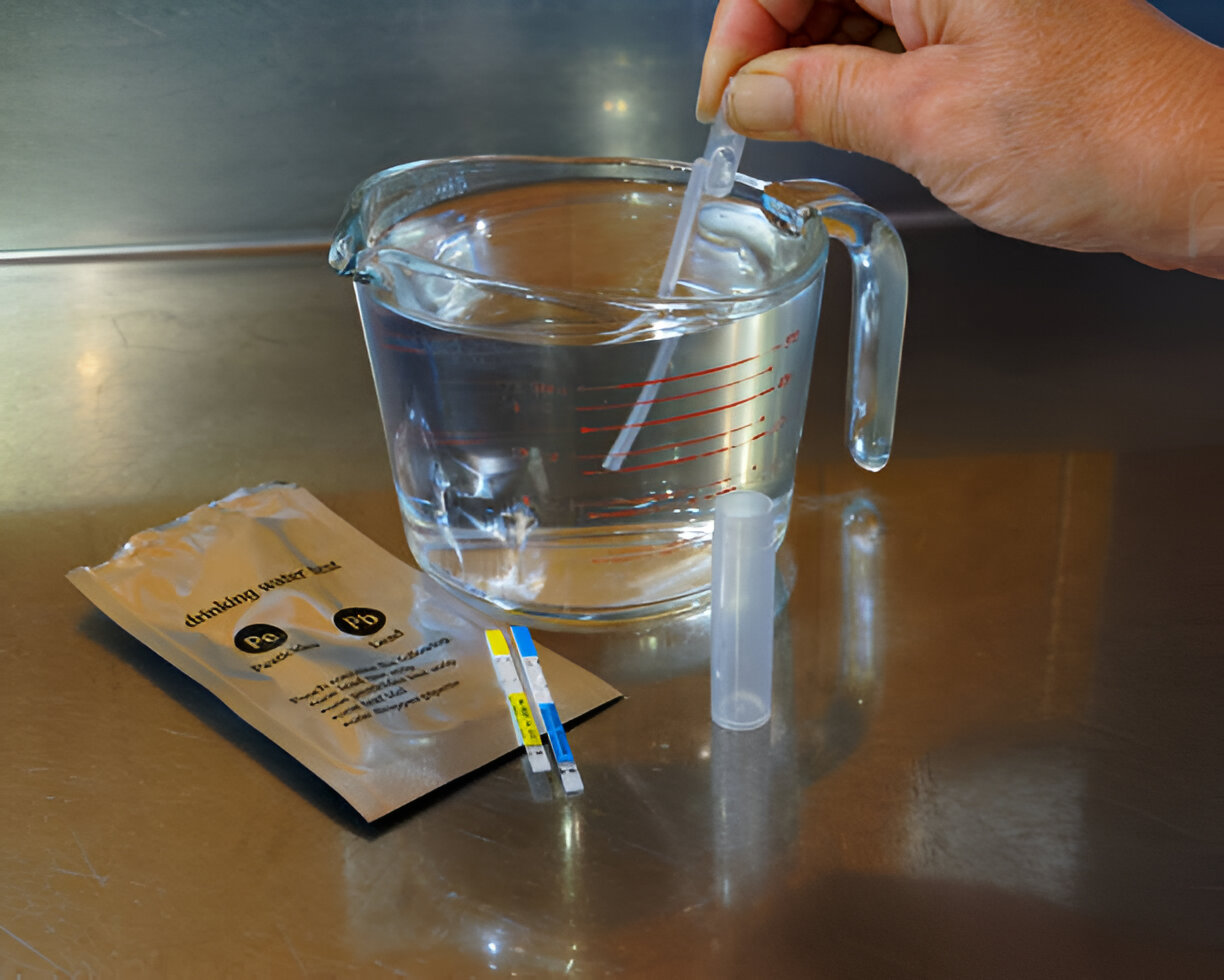
Yes. NYC DEP provides free lead test kits to any city resident — call 311 or request one at nyc.gov/dep. For most homeowners simply wanting to know whether lead is present, that's the right option. Paid certified testing is for child care facilities (which cannot use the free kit), time-sensitive situations, and cases requiring chain-of-custody documentation.
Results are mailed back and can take weeks or, in some cases, months. If you’re working to a deadline — a closing, a violation response, a licensing inspection — that timeline may not work.
The EPA's current action level is 15 parts per billion, dropping to 10 ppb under the Lead and Copper Rule Improvements with a compliance date of November 1, 2027. Note that the action level is a regulatory trigger, not a safety threshold — the EPA's health goal for lead in water is zero.
Lead water service lines were banned in NYC in 1961, so buildings predating that may have one. DEP records show more than 119,000 confirmed lead service lines in the city and another 110,000 of unknown material. DEP maintains a service line inventory and runs a replacement program.
No. Local Law 31 is a lead-based paint testing law. Lead in drinking water is regulated separately, primarily through the federal Lead and Copper Rule. A building can be fully compliant with Local Law 31 and still have lead in its water.
Use cold water only for drinking and cooking, flush the tap before use, and use a filter certified to NSF/ANSI 53 for lead. Longer term, identify your service line material, check eligibility for DEP’s replacement program, and have a licensed plumber address lead-containing fixtures or internal piping. Retest after any work.
Yes — Manhattan, Brooklyn, Queens, The Bronx, and Staten Island.