
Lead dust is invisible, settles at floor level where children play, and ordinary cleaning doesn’t remove it. Manhattan Lead contains the area, removes the dust with HEPA vacuuming and wet cleaning, and confirms the result with independent-lab clearance testing documented proof the space is safe to re-occupy. All five boroughs.
Certified lead dust cleanup & clearance
Lead dust is the primary way lead harms children — it’s invisible, it settles on floors and window sills, and ordinary cleaning doesn’t remove it. It’s generated whenever lead paint is disturbed: during renovation, abatement, or the normal friction of old windows and doors.
Manhattan Lead provides EPA-certified lead dust remediation across New York City. We contain the work area, remove settled lead dust with HEPA vacuuming and wet-cleaning methods, and confirm the result with clearance testing analyzed by an independent lab. You get documented proof the space is safe to re-occupy.
Don’t risk your health—choose our reliable lead dust remediation in NYC and enjoy a safer, cleaner space.


Certified Lead Dust Remediation in NYC
Lead-based paint was used in most buildings constructed before 1978, and it releases hazardous dust whenever it’s disturbed — during renovation, demolition, window replacement, or abatement work. That dust is the single most common route of lead exposure for young children, because it settles at floor level where children play and is easily ingested through hand-to-mouth contact.
Ordinary cleaning doesn’t remove it. Sweeping and standard vacuums can actually make it worse by pushing fine particles airborne. Professional lead dust remediation uses HEPA vacuuming and wet-cleaning methods that capture and remove the particles rather than redistributing them. We conduct clearance testing after the work to confirm — with lab-analyzed dust wipe samples — that the space meets regulatory standards for re-occupancy.
Still unsure if you need lead paint dust remediation? Give us a call for an inspection and lead testing!
A Comprehensive Lead Dust Cleaning in NYC
Failing to remove dust properly can result in ongoing health problems and expensive repairs. Consider these risks:
Without thorough cleaning, harmful particles stay in your home and spread, posing a danger to children's developing lungs.
Dust can carry contaminants like lead and asbestos, spreading hazards to unaffected areas without proper containment.
Project areas must pass dust tests for safe occupancy after lead or asbestos renovations. Improper cleaning can lead to costly retesting and additional cleaning.
Inadequate cleanup can discourage potential buyers, leading to a lower sale price or longer time on the market.
Don’t risk your health safety or get stuck with major expenses for lead dust abatement or lead dust remediation. Rely on our experts for complete dust control from start to clearance finish.
Ready to tackle your dust problem? Our team provides dust remediation services. Call now!
NYC's Trusted Dust Cleanup Experts
After cleaning, we collect dust wipe samples from floors, window sills, and window troughs and submit them to an independent, EPA-recognized laboratory. Clearance is achieved when all samples meet the applicable dust-lead standards. You receive a laboratory certificate of analysis as documented proof that the area has successfully passed clearance testing and is safe for re-occupancy.
Professional Dust Removal & Mitigation
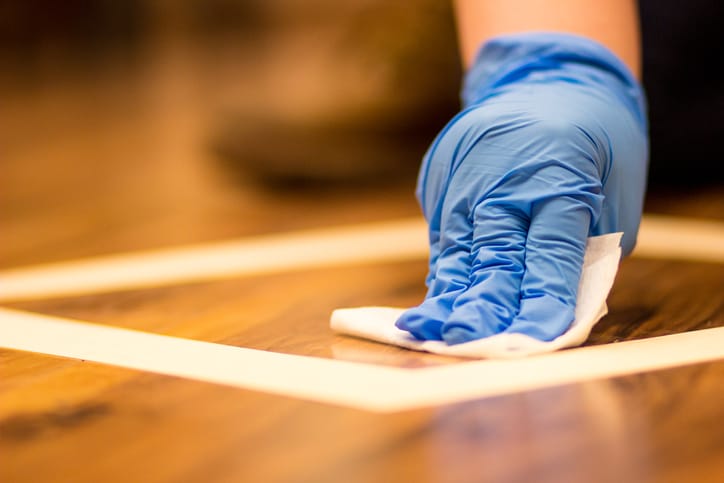
Dust cleanup is recommended after events such as:
Our certified lead dust remediation & lead dust cleaning experts can assess your situation and advise on cleaning needs. Lead dust remediation is crucial for the ongoing safety of building occupants.
Start breathing cleaner air today! Contact us to schedule your dust remediation service.
New York Dust Remediation Services
At Manhattan Lead Inspections, as specialists in lead dust remediation and clearance testing in New York City, we handle the full cycle: pre-work assessment, containment, HEPA vacuuming and wet cleaning, and independent lab clearance testing. We also remediate lead dust left behind by other contractors who disturbed lead paint without proper cleanup.
Our independence is built into how we work. The clearance testing that confirms a space is safe is analyzed by an independent laboratory — not by us marking our own homework. That separation is what makes the clearance result credible for HPD, for a property sale, or for a tenant.
Ready to rid your space of dust hazards and breathe easier? Contact our expert team today!

Knowledgeable lead paint professionals
FAQ'S
Lead dust remediation combines containment and specialized cleaning. The work area is first isolated to prevent dust spreading. Technicians then use HEPA-filtered vacuums, which capture particles far too fine for ordinary vacuums, followed by wet-wiping of all surfaces with lead-specific cleaning agents. The combination removes settled lead dust rather than redistributing it. The job isn’t finished until clearance testing confirms the surfaces meet regulatory dust-lead levels.
Dust mitigation means controlling lead dust during work so it doesn’t spread beyond the work area or become airborne. On a lead job this means sealing off the space with plastic sheeting, using negative air pressure where appropriate, and cleaning as work progresses rather than only at the end. Good containment is what keeps a lead paint disturbance in one room from contaminating an entire apartment.
If the renovation disturbed lead-based paint — likely in any building built before 1978 — the dust needs more than ordinary cleaning, because lead particles are too fine for household vacuums and settle invisibly on floors and sills. A certified remediation team contains the area, removes the dust with HEPA vacuuming and wet cleaning, and confirms the result with lab-analyzed dust wipe samples. That clearance testing is what tells you the space is genuinely safe for children, not just visibly clean.
Effective lead dust control combines containment and removal. Containment means sealing the work area with plastic barriers so dust can’t migrate. Removal means HEPA vacuuming followed by wet-wiping — the two methods that actually capture fine lead particles rather than stirring them back into the air. Sweeping and standard vacuuming do the opposite, so they’re never used on a lead job. The work is verified by clearance testing, not by visual inspection.
Clearance is measured against dust-lead action levels for floors, window sills, and window troughs. [VERIFY CURRENT NUMBERS — federal levels as of 2026 are 5, 40, and 100 µg/ft² respectively; NYC adopted these ahead of the federal government.] Every sample must fall below the applicable level for the space to pass.
Lead dust is too fine for household vacuums and invisible to the eye. Ordinary cleaning tends to redistribute it rather than remove it, and there’s no way to confirm success without lab-analyzed dust wipe samples. For occupied units, especially with young children, self-cleaning also risks exposing your family during the work.
Yes. We frequently perform independent clearance testing after abatement done by other contractors. Because our clearance testing is analyzed by an independent lab, it provides credible, third-party confirmation that the work met standard.